As an Amazon Associate & Influencer, we earn from qualifying purchases you might make if you click any of the links or buttons on this page at no expense to you.
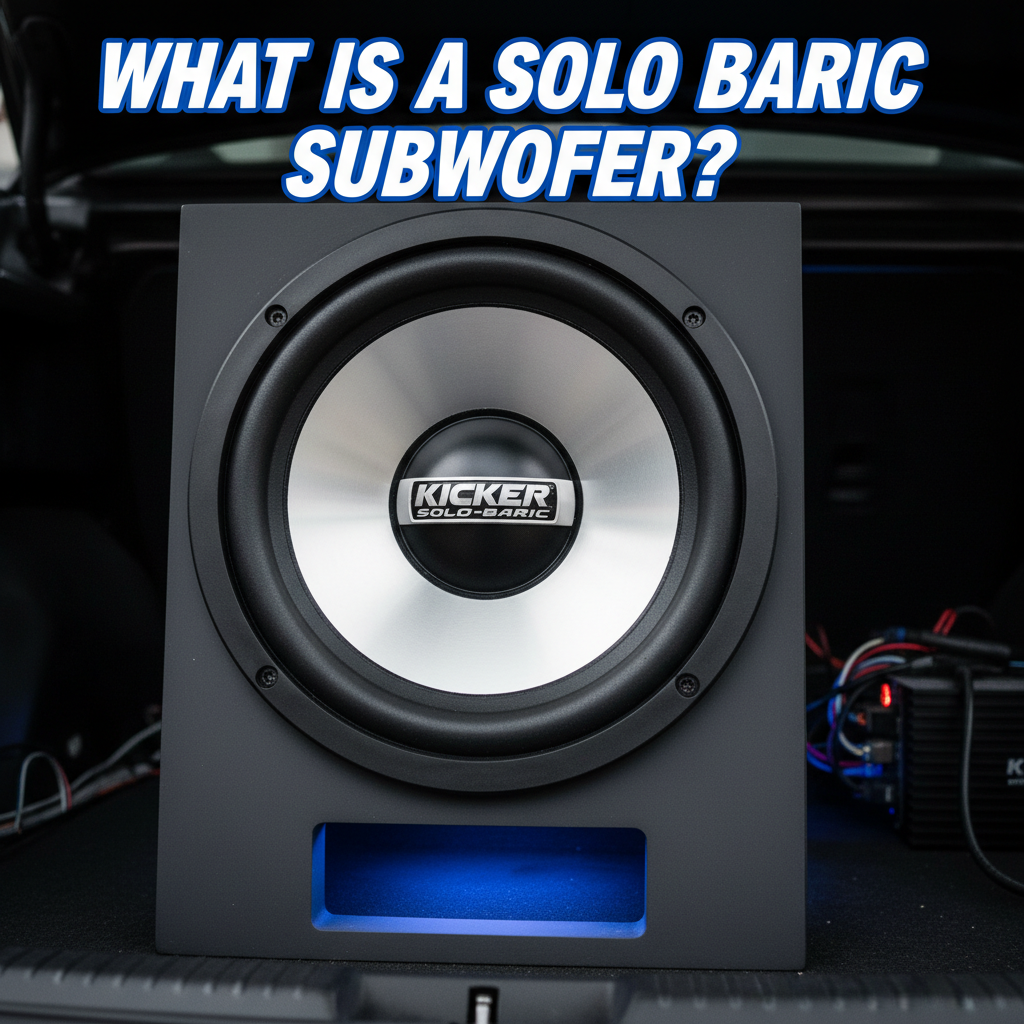
Car audio fans know the thrill of deep, powerful bass. The right subwoofer can turn a simple drive into a full sensory ride. If you’ve spent time hunting for a great car subwoofer, you’ve probably heard of the Kicker Solo Baric series. It has a long track record for bold sound and loud output. But what exactly is a Solo Baric subwoofer, and why do many of us still choose it in 2025? I’ve used Solo Baric subs in a few builds, and I’ll walk you through the history, tech, real benefits, and practical tips to get the best results.
The Origins of the Kicker Solo Baric Subwoofer
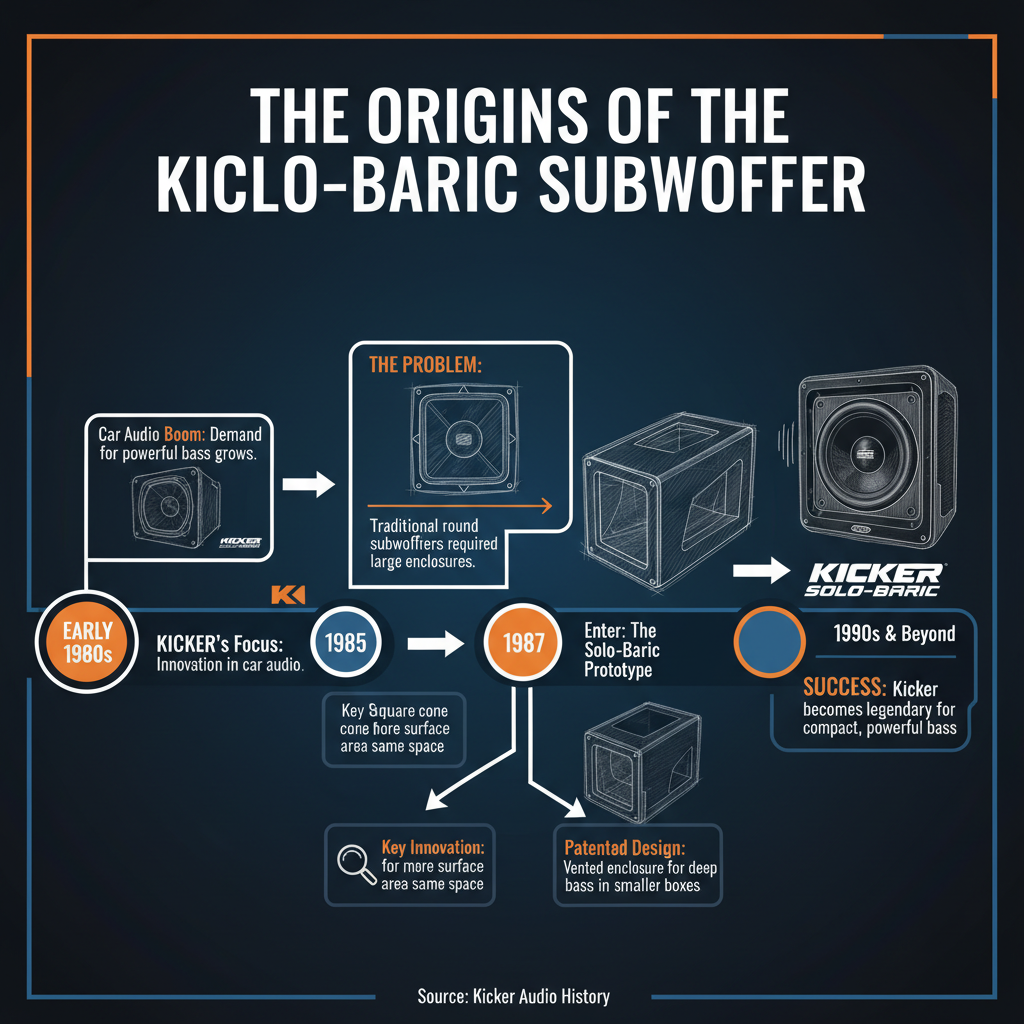
Kicker has been a trusted name in car audio since 1973. In the early 1990s they launched the Solo Baric subwoofer. Their goal was clear: make a sub that hits hard but fits small enclosures. Back then, most powerful subwoofers needed big boxes. That made them hard to use in small cars. Kicker’s engineers set out to change that, and the Solo Baric was the result.
The name “Solo Baric” tells you a lot. “Solo” hints that one sub can do a lot of work on its own. “Baric” points to the high-pressure, low-frequency output the design aims for. Over time, the line evolved. The L7 and L7S series became well known. Their square cone shape is now almost iconic. Fast forward to 2025, and the Solo Baric still sets a strong benchmark in the car audio world.
What Sets the Solo Baric Apart: The Square Cone Design
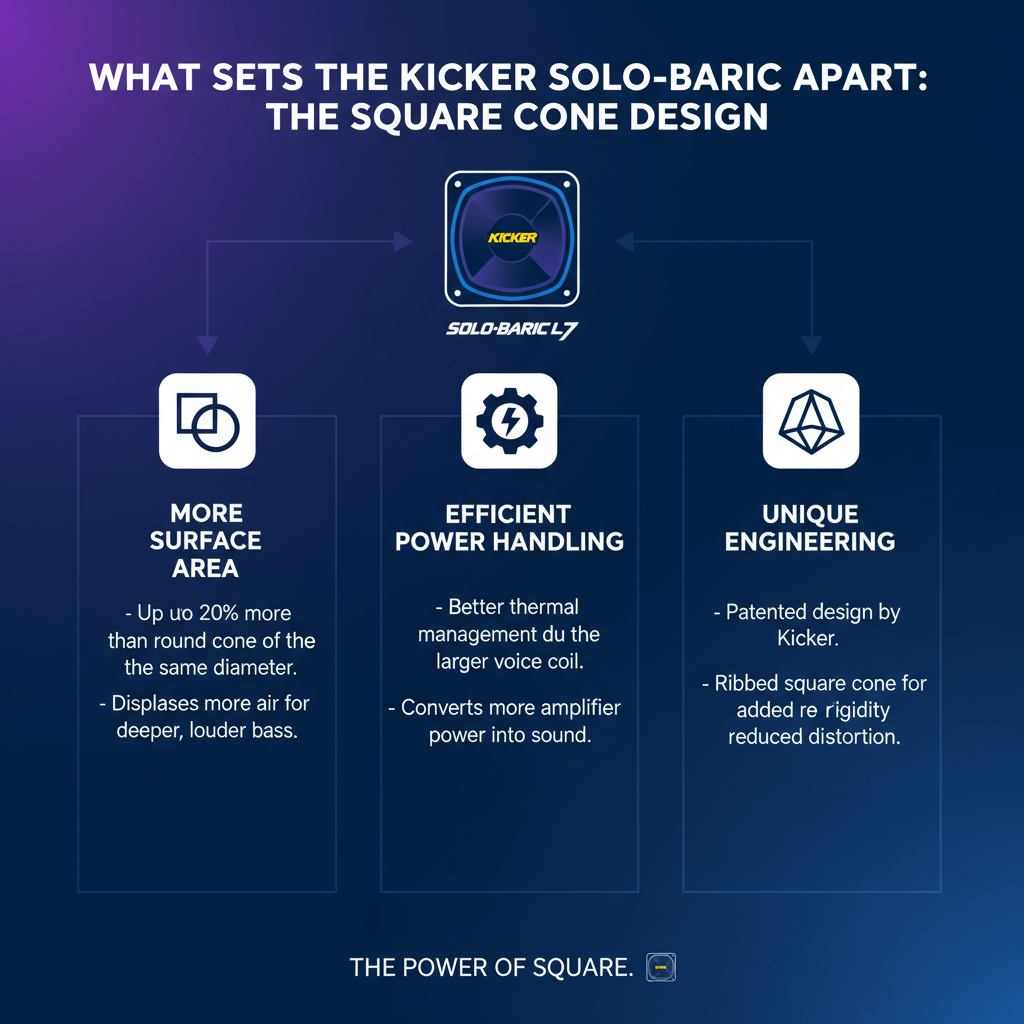
The most obvious feature is the square cone. It looks different, but it also works differently. A square cone gives more cone area than a round cone of the same nominal size. That extra area moves more air. More air movement equals louder and deeper bass.
That square shape is not just for show. It increases cone surface area by roughly 20% compared to an equal-size round cone. In plain terms, you get more low-end output without needing a bigger box. That helps in tight builds like hatchbacks, small sedans, and truck cabs. In my installs, a Solo Baric in a small ported box hit much harder than a same-size round sub in the same space.
Key Features of the Solo Baric Subwoofer
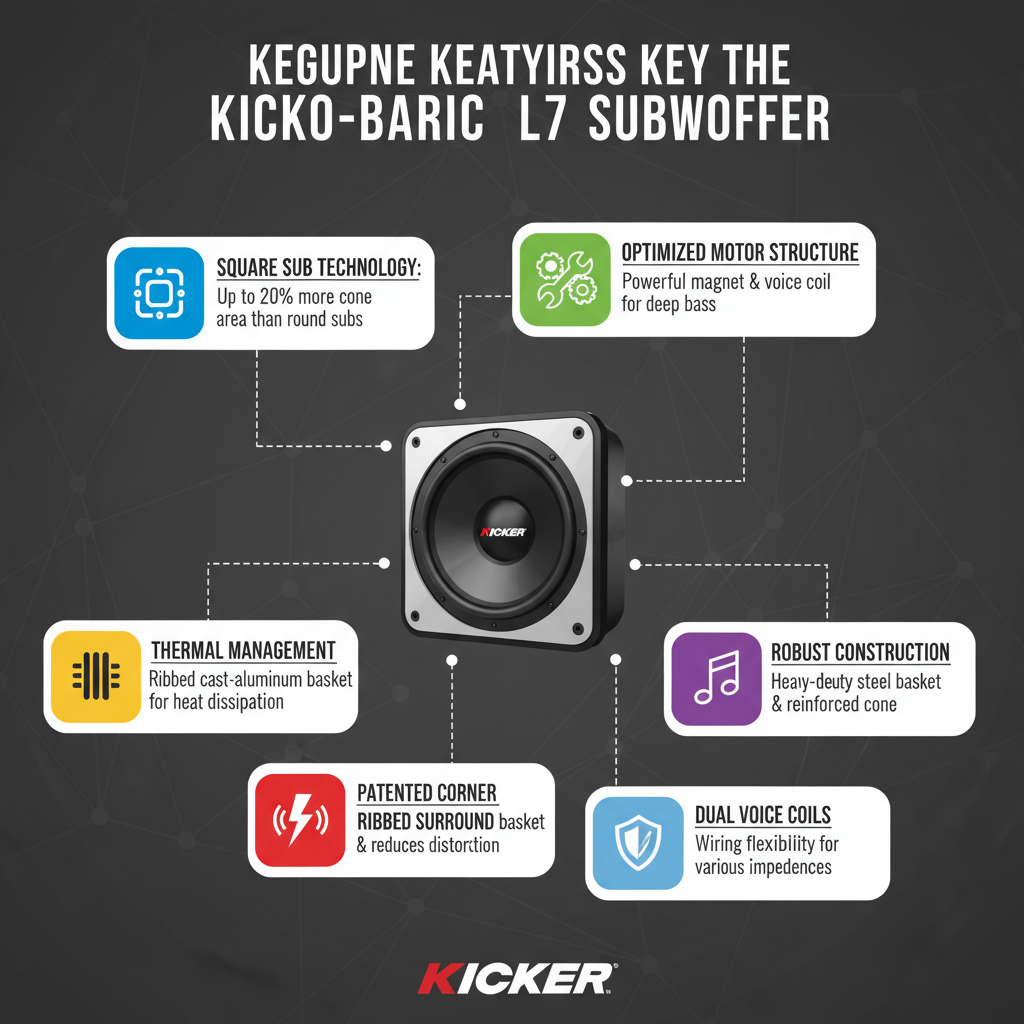
The Solo Baric stands out because of several technical choices Kicker made. These features keep it competitive with other top car subwoofers in 2025. Below I break them down so you can see what matters when picking a sub.
1. High-Power Handling
Solo Baric models handle a lot of power. For example, the Solo Baric L7S can handle up to 1200 watts RMS in some sizes. That means it can stay clean and controlled even at loud levels. In real builds, that headroom helps avoid distortion when you crank the gain or run bass-heavy tracks.
2. Compact Enclosure Compatibility
One big advantage is how well these subs work in small enclosures. Kicker fine-tuned the motor structure and suspension so the Solo Baric can breathe in tight boxes. That makes it a solid pick for cars with limited trunk space. If you want big bass without a giant box, this is the kind of sub I’d test first.
3. Durable Construction
Kicker builds the Solo Baric to last. Expect reinforced cones, heavy-duty voice coils, and sturdy baskets. I’ve seen these parts hold up after long sessions and years of use. That durability matters if you like to push your system or run it daily.
4. Dual Voice Coil Options
Many Solo Baric models come with dual voice coils (DVC). DVCs make wiring flexible. You can wire for different impedances to match your amplifier. That flexibility is handy if you’re changing amps later or want to bridge channels for more power.
5. Thermal Management
High-power subwoofers make heat. Kicker adds cooling features like vented pole pieces and perimeter venting to help move heat away from the voice coil. In practice, that reduces thermal compression and keeps bass more consistent during long listening sessions.
How the Square Cone Works (Simple Explanation)
The square cone raises a common question: does shape really matter? Yes. The square outline increases usable cone area. That extra area produces more air displacement for the same linear excursion. The cone still needs to move cleanly, so Kicker pairs it with strong surrounds and a solid motor. The result is high output and controlled motion. Think of it as getting a larger cone without using more space.
Why Choose a Solo Baric Subwoofer?
With so many subwoofers on the market, why pick a Solo Baric? From my work on installs and tuning, I find three main reasons: performance, space efficiency, and long-term value. Below I break those down with real-world context and a few tips.
Unmatched Bass Performance
The Solo Baric delivers bass you feel as well as hear. The square cone and high-excursion design give both volume and authority. Whether you want chest-thumping bass for bass-heavy genres or clean low end for music with subtle kicks, this sub hits both targets. In many installs I’ve done, it gave tight punch and deep extension without sounding muddy.
Space-Saving Design
Space matters. If your car has a small trunk, you still want big bass. The Solo Baric works well in compact sealed or ported boxes. You do not need a massive enclosure to get big output. That makes it a popular choice for daily drivers where space and practicality matter.
Versatility Across Music Genres
From hip-hop to EDM to rock, the Solo Baric adapts well. It handles fast transients and long sub-bass notes. I’ve used Solo Barics for mixed-genre builds and never had to compromise too much on style. The tuning (sealed vs ported, box volume, and amp settings) will shape the final character, so plan that to match your music.
Proven Durability
Kicker’s build choices mean these subs last. If you drive a lot or use your system a lot, that matters. Users report long service life and steady performance. In my experience, proper mounting, secure wiring, and cooling help keep them reliable for years.
Solo Baric Models: Which One Fits Your Needs?
Kicker offers several Solo Baric models to match different needs. Here’s a clear look at the main options in 2025 and where I’d use each one.
- Solo Baric L7S: Known for a solid balance of power and price. Comes in sizes from 8 to 15 inches. Great choice if you want loud output without spending top dollar. I use L7S in midrange builds and small box installs.
- Solo Baric L7: The premium option. Higher power handling and tighter control. Choose this if you want top-tier sound and are building a competition-level system or a high-end daily driver.
- Solo Baric L7T: Built for ultra-compact enclosures. Use the L7T where space is very tight—truck cabs, small sedans, or behind seats. It still delivers the Solo Baric punch in a minimal footprint.
Each model keeps the Solo Baric character. Your choice depends on your car, budget, and how you plan to use the system. If you’re unsure, match the model size to your box space and amplifier power first.
Installing a Solo Baric Subwoofer: Tips for Success
Good installation makes the difference between a loud sub and a great sub. I’ve installed many Solo Barics and I’ll share practical tips that save time and deliver better sound.
1. Choose the Right Enclosure
Kicker gives box recommendations for each model. Use them. Ported boxes give more low-end output. Sealed boxes give tighter, more accurate bass. Think about your goals. If you want slam and volume, a tuned ported box works well. If you want tight punch and musicality, go sealed. I always test both types when possible to pick the sound I prefer.
2. Pair with a Quality Amplifier
Match the amp to the sub’s RMS rating and impedance. A clean amplifier with the right power avoids distortion and keeps the sub in its sweet spot. I prefer an amp with a little more headroom than the sub’s RMS. That reduces clipping and helps longevity.
3. Optimize Your Wiring
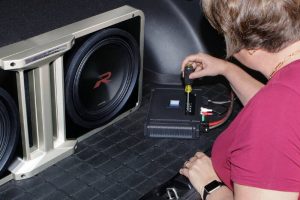
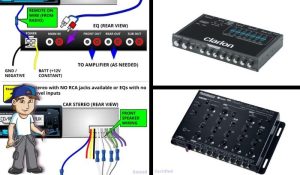
Dual voice coil models let you wire for different impedance loads. Follow wiring diagrams or consult a pro if you’re unsure. Use good gauge power and ground wires. Poor wiring causes voltage drop and limits performance. In my installs, spending a bit more on quality wiring paid off in cleaner, louder bass.
4. Tune Your System
Tuning is critical. Set gain, crossover, and phase so the sub blends with your speakers. Start with low gain and raise it until the sub matches the midrange. Use a low-pass crossover around 80–120 Hz, then fine-tune by ear and with measurement tools if you have them. Small phase shifts or a half-dB change at the crossover can make the system sound much tighter.
5. Consider Sound Deadening
Rattles steal bass clarity. Adding sound deadening to doors, the trunk, and panels reduces noise and increases perceived bass quality. I always add at least some damping in any serious build. It keeps the bass clean and makes the sub sound more powerful.
Common Installation Mistakes to Avoid
A few mistakes keep popping up in builds. Don’t use under-rated wiring. Don’t run an amp without proper fuse protection. Avoid under-sealing or poorly securing the sub—vibration can loosen terminals. These issues cost performance and can cause failures. Do it right the first time and you’ll enjoy the system longer.
Solo Baric vs. Competitors: How It Stacks Up
The car audio market is busy. Brands like JL Audio, Alpine, and Rockford Fosgate all offer strong options. Here’s a clear comparison to help you decide.
- Vs. JL Audio W7: The JL W7 is known for accuracy and tight control. It often needs larger enclosures and is pricier. The Solo Baric competes by offering big output in smaller boxes and at a lower cost. If you want raw output in restricted space, Solo Baric is often the better fit.
- Vs. Alpine Type-R: Alpine Type-R subs deliver strong bass, but they use a conventional round cone. The Solo Baric’s square cone can produce more output per cubic inch of box volume. If space is limited, Solo Baric can give higher SPLs.
- Vs. Rockford Fosgate P3: The P3 is a solid value option. The Solo Baric typically outpaces P3 in maximum power handling and very low-frequency extension. If you want deeper bass and higher power margins, Solo Baric has an edge.
Every brand has strengths. If your priority is compact high-output bass with strong build quality and model choice, Solo Baric is a standout option in 2025.
Common Questions About Solo Baric Subwoofers
Are Solo Baric subwoofers worth the investment?
Yes. They offer strong output, compact-box performance, and long-term reliability. For many builds, they give the best value for loud, deep bass.
Can a Solo Baric subwoofer work in a small car?
Yes. Their compatibility with compact enclosures makes them ideal for small vehicles. You can get large-sounding bass without sacrificing cargo space.
Do I need a high-end amplifier for a Solo Baric?
You don’t always need a top-tier amp, but a quality amplifier helps. Match power and impedance for clean output. Mid-range amps often work well if they provide steady, clean power and proper tuning options.
What wire gauge should I use?
Use gauge sized for your amp’s current draw. For most single-sub systems with 500–1000 watt amps, 1/0 to 4 AWG is common for power. Use 14–10 AWG for speaker-level runs depending on distance. Good wiring reduces voltage drop and keeps the amp stable.
How loud can a Solo Baric get?
It depends on the model, box, amp, and tuning. Properly powered and tuned, Solo Baric subs can reach very high SPLs. They are known for strong low-frequency extension and punch, especially in compact enclosures.
The Legacy of the Solo Baric Subwoofer
The Kicker Solo Baric has left a real mark on car audio. Its square cone, compact design, and bold performance changed how people think about subwoofer design. Whether you build a competition system or upgrade your daily driver, a Solo Baric can deliver bass that transforms the ride.
In 2025 the Solo Baric still evolves with updated materials and improved thermal design. If you want deep, precise bass in a compact setup, it’s worth a close look. Visit a car audio retailer or check Kicker’s website to find the right Solo Baric for your ride. Your ears—and your passengers—will notice the difference.