As an Amazon Associate & Influencer, we earn from qualifying purchases you might make if you click any of the links or buttons on this page at no expense to you.
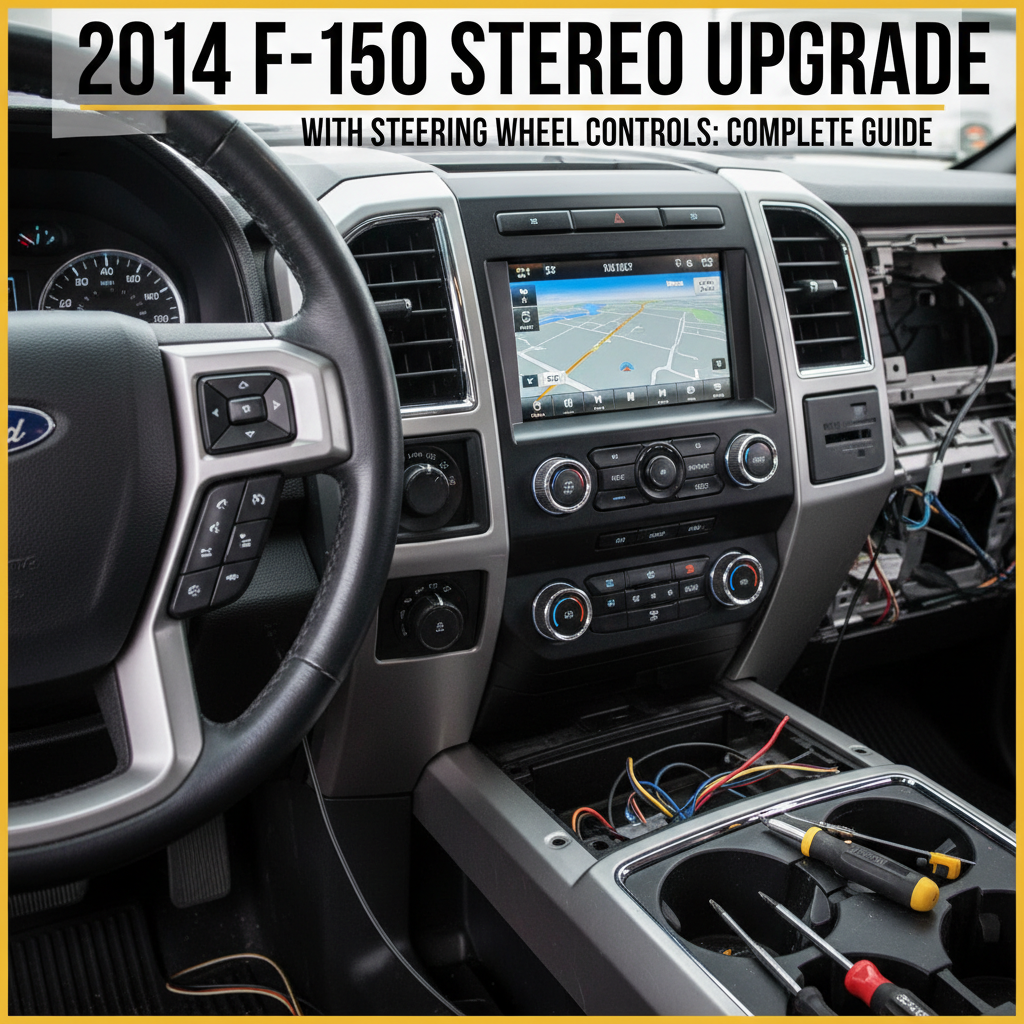
Upgrading your 2014 Ford F-150’s stereo system while keeping your steering wheel controls working requires careful planning and the right equipment. Many truck owners want better sound quality and modern features without losing the convenience of their factory controls.
To upgrade your 2014 F-150 stereo with working controls, you’ll need an aftermarket head unit, a steering wheel control interface module, and proper wiring harnesses. The Maestro RR or PAC SWI-RC interface modules are popular choices that maintain full steering wheel functionality while adding new features to your upgraded system.
2014 F-150’s Audio System Basics
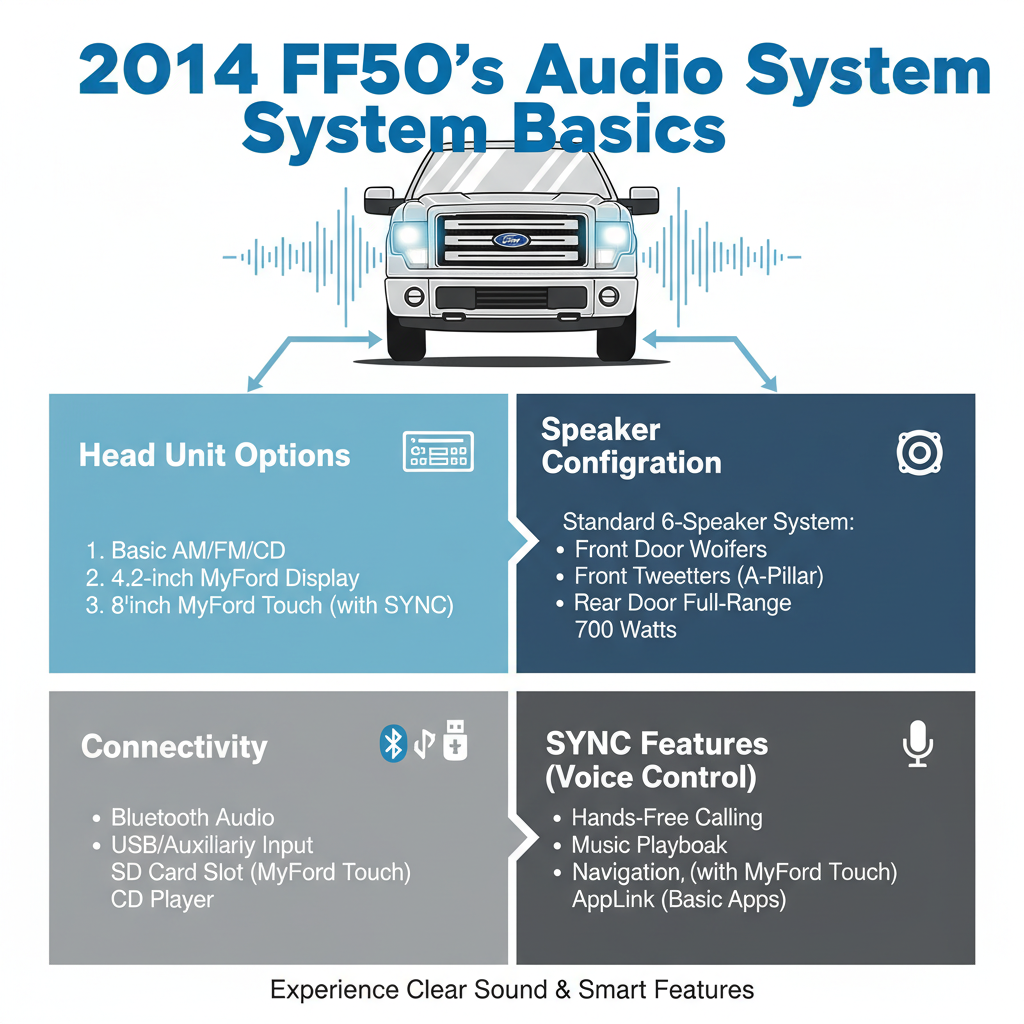
The 2014 F-150 came with different factory stereo options depending on trim level. Base models had simple AM/FM systems, while higher trims featured Ford SYNC with touchscreen displays.
Your truck’s steering wheel controls communicate through the vehicle’s data network. When you press volume up, skip track, or voice command buttons, signals travel through wires behind the steering wheel to the factory radio.
This integration means you can’t simply swap radios without additional equipment.
Essential Components for Your 2014 F-150 Stereo Upgrade
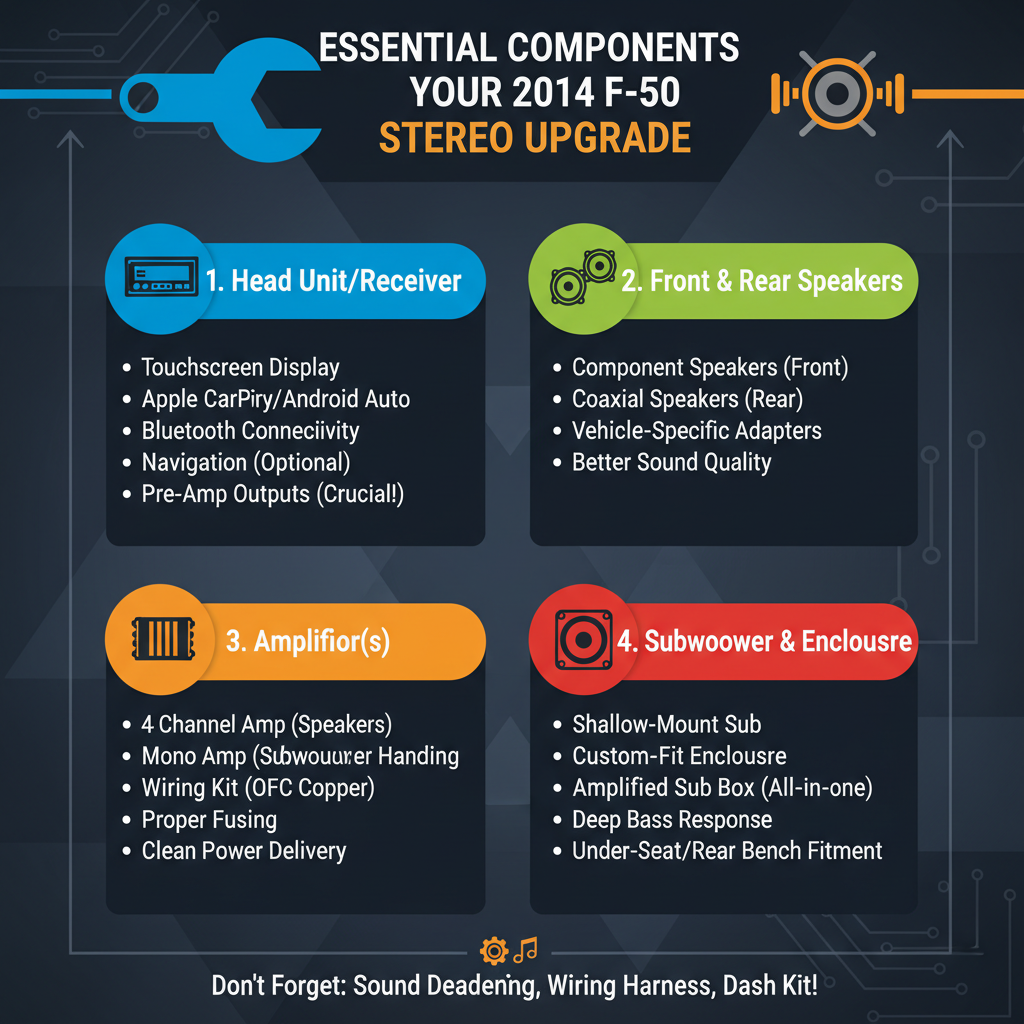
Aftermarket Head Unit
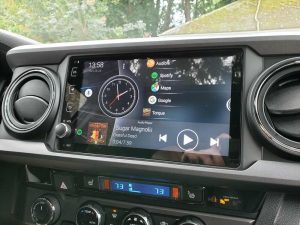
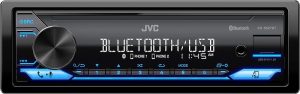
Choose a double-DIN or single-DIN head unit based on your dashboard opening. Popular options include:
– Pioneer AVH-W4500NEX for wireless CarPlay/Android Auto
– Kenwood DMX7706S for excellent sound processing
– Alpine iLX-W650 for budget-friendly smart features
Steering Wheel Control Interface
The interface module translates your steering wheel button presses into commands your new stereo understands.
Maestro RR modules offer the most comprehensive integration. They maintain factory features like:
– Volume and track controls
– Voice commands
– Phone controls
– Climate display retention (on equipped models)
PAC SWI-RC provides basic steering wheel control retention at a lower cost but with fewer advanced features.
Wiring Harnesses
You’ll need vehicle-specific harnesses to connect everything properly:
– Radio removal tools for your F-150’s dash
– Wiring harness adapter for your truck’s electrical connections
– Antenna adapter if switching between different connector types
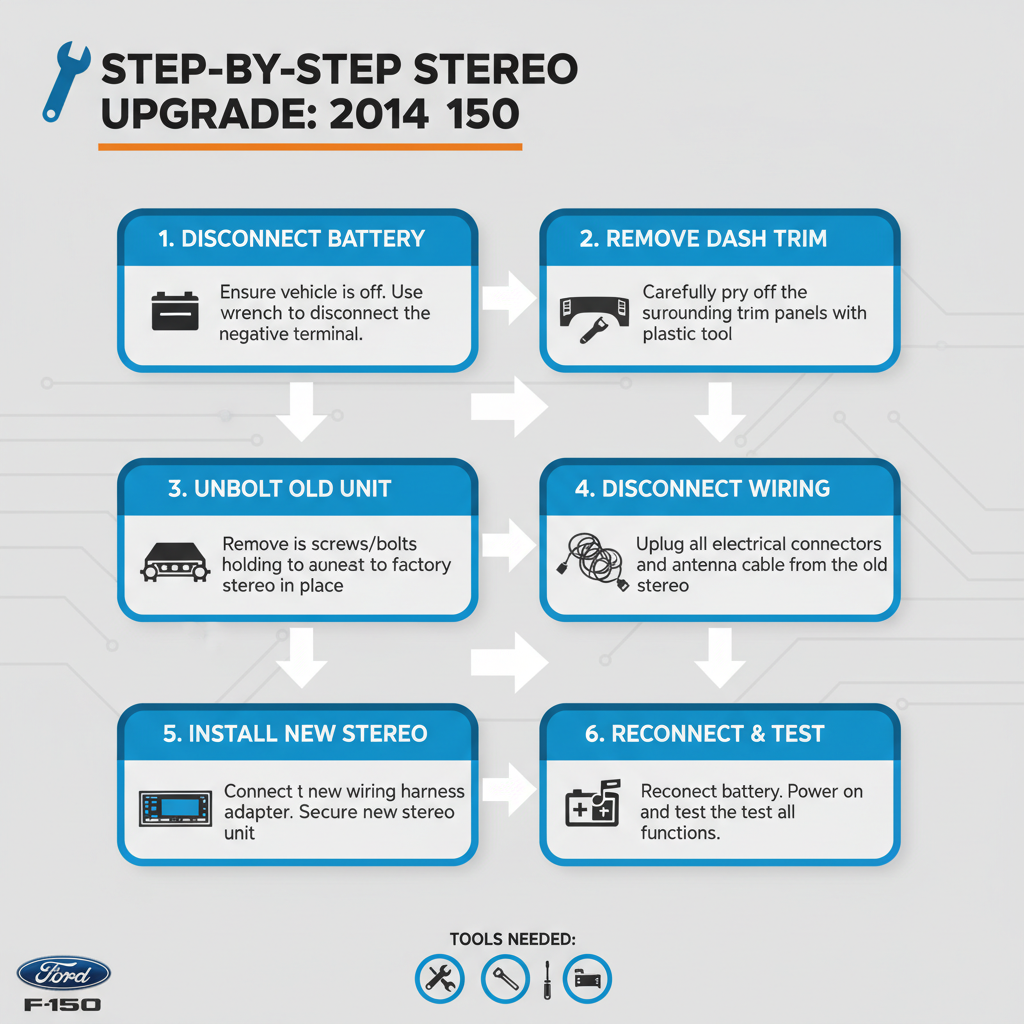
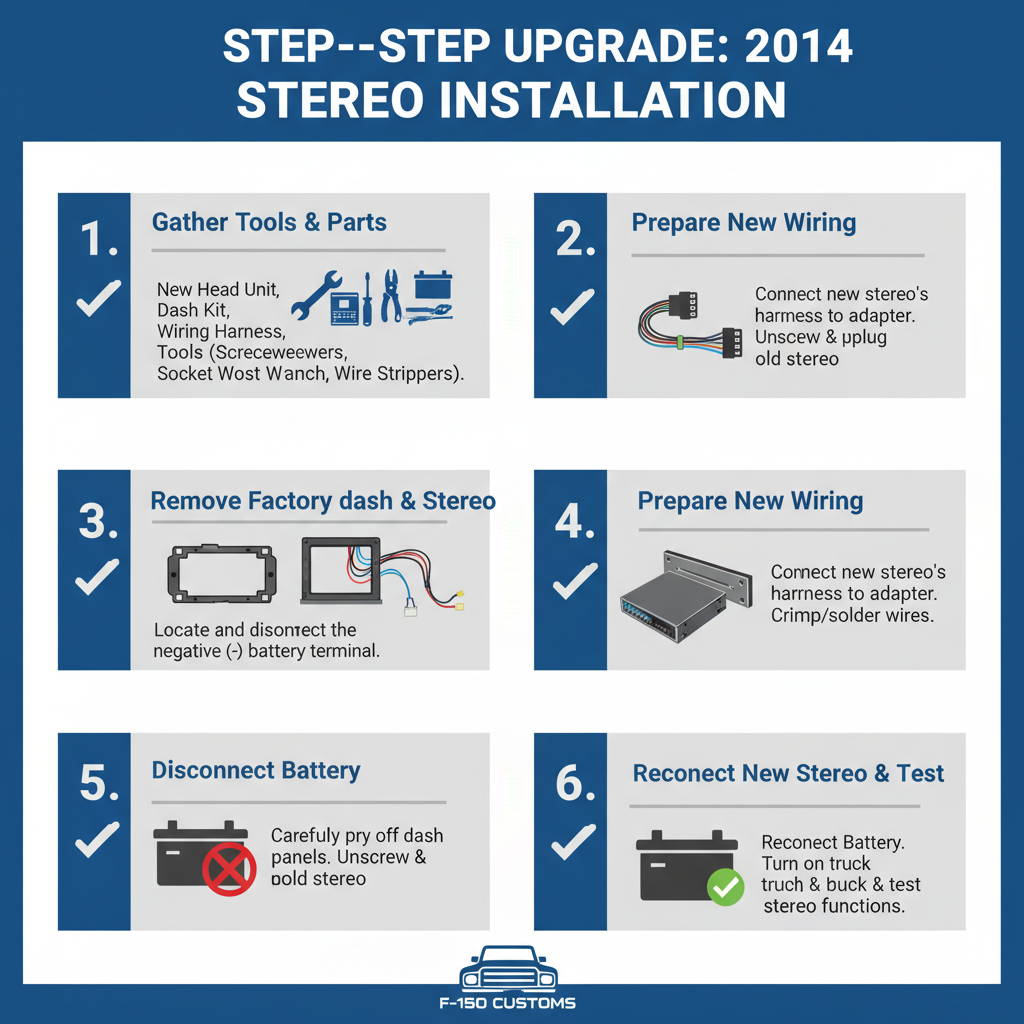
Step-by-Step Installation Process For Upgradation of 2014 F-150 Stereo
Preparation and Safety
Disconnect your truck’s battery before starting any electrical work. This prevents short circuits and protects your vehicle’s computer systems.
Gather your tools:
– Panel removal tools
– Wire strippers
– Electrical tape
– Multimeter for testing connections
Removing the Factory Radio
Use plastic prying tools to remove the center console trim panel. The 2014 F-150’s radio is held by four screws behind the trim.
Carefully disconnect the factory wiring harnesses and antenna cable. Take photos before disconnecting anything to reference later.
Installing the Interface Module
Connect the Maestro RR or PAC SWI-RC module according to its instructions. These typically connect between your truck’s factory harness and the new radio.
Most modules require programming to match your specific vehicle and new head unit. Follow the manufacturer’s setup procedure exactly.
Connecting Your New Head Unit
Wire your aftermarket radio to the interface module and vehicle harnesses. Double-check all connections before powering on.
Test each steering wheel button to ensure proper programming. You may need to adjust settings in the interface module’s software.
Advanced Integration Options
Retaining Factory Features
Higher-end interface modules like the Maestro RR can maintain more factory functions:
Climate Control Display: Some F-150s show climate information on the radio screen. Advanced modules preserve this feature.
Vehicle Settings: Access to truck configuration menus through your new stereo.
Factory Amplifier Integration: If your truck has a premium sound system, proper modules maintain amplifier functionality.
Adding New Capabilities
Modern interface modules can add features your factory system never had:
– Backup camera integration
– Additional USB ports
– Enhanced voice recognition
– Custom button programming
Common Installation Challenges
Programming Issues
Interface modules sometimes require multiple programming attempts. If steering wheel controls don’t work initially:
– Verify all wiring connections
– Check the module’s compatibility list
– Update the module’s firmware if available
– Consult the manufacturer’s troubleshooting guide
Dash Fit Problems
Aftermarket radios may not fit perfectly in your F-150’s dashboard opening. Dash kits help fill gaps and provide a factory appearance.
Some installations require minor trimming of plastic panels. Work slowly and test-fit frequently.
Audio Quality Concerns
If sound quality decreases after your upgrade:
– Check speaker wire connections
– Verify amplifier integration settings
– Adjust equalizer settings on your new head unit
– Consider upgrading speakers along with the radio
Choosing the Right Professional Installer
While DIY installation is possible, professional installation offers advantages:
Experience with F-150s: Installers familiar with Ford trucks can avoid common pitfalls.
Proper Tools: Professional shops have specialized tools for clean installations.
Warranty Coverage: Many shops warranty their installation work.
Time Savings: Professional installation typically takes 2-4 hours versus a full day for DIY.
Cost Considerations
Budget for these components:
– Head unit: $200-800
– Interface module: $100-300
– Installation supplies: $50-100
– Professional installation: $150-400
Higher-end interface modules cost more but provide better integration and more features.
Frequently Asked Questions
Will I lose my factory backup camera?
Most modern head units support factory backup cameras. Verify compatibility before purchasing, or choose an interface module that specifically maintains camera functionality.
Can I keep my factory amplifier?
Yes, with the right interface module. The Maestro RR and similar advanced modules maintain factory amplifier integration while allowing aftermarket head unit control.
Do I need special tools for installation?
Basic installations require standard tools plus plastic prying tools for trim removal. Professional installers have specialized tools that make the job cleaner and faster.
Will this void my truck’s warranty?
Aftermarket stereo installation shouldn’t void your entire vehicle warranty, but any damage caused by improper installation won’t be covered. Professional installation reduces this risk.
Can I program the interface module myself?
Most modules include programming instructions, but some require computer software or specific procedures. Check the manufacturer’s requirements before purchasing.
What if my steering wheel controls stop working later?
This usually indicates a loose connection or module programming issue. Check all wiring connections first, then consult the interface module’s troubleshooting guide.
Will my new stereo display vehicle information?
Advanced interface modules can display some vehicle data on aftermarket head units, but functionality varies by module and radio combination.
Key Takeaways
Upgrading your 2014 F-150’s stereo while maintaining steering wheel controls is definitely achievable with proper planning and equipment. The Maestro RR interface module offers the most comprehensive integration, while budget options like the PAC SWI-RC provide basic functionality at lower cost.
Success depends on choosing compatible components and following installation procedures carefully. Professional installation can save time and ensure proper integration, especially for complex setups with factory amplifiers or advanced features.
Take time to research compatibility between your chosen head unit and interface module before purchasing. This upfront planning prevents compatibility issues and ensures you’ll enjoy both modern stereo features and convenient steering wheel controls in your upgraded F-150.