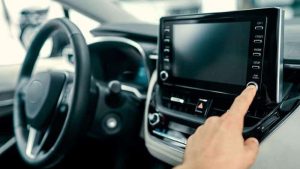
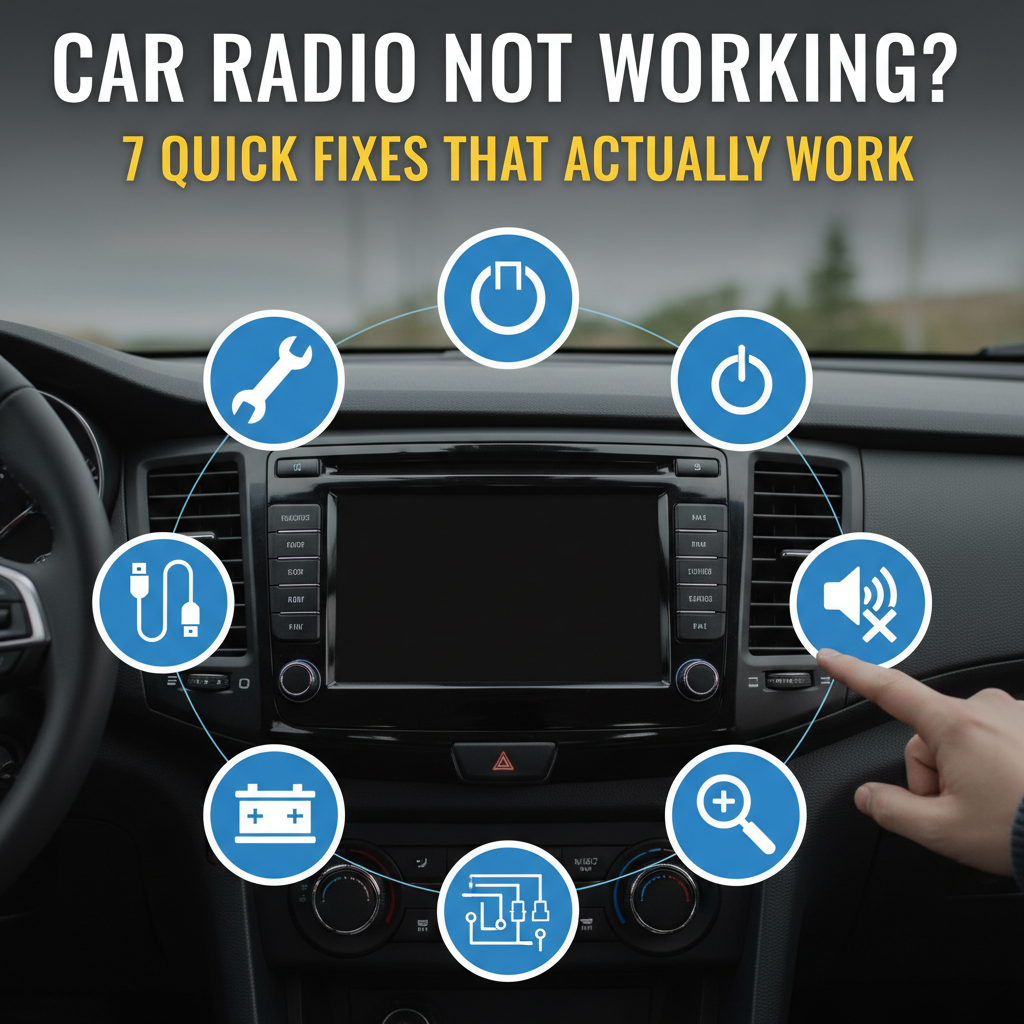
A car radio that suddenly stops working can turn any drive into an uncomfortable silence. Most car radio problems stem from blown fuses, loose wiring connections, antenna issues, or power supply failures that can be diagnosed and often fixed without professional help.
This guide walks you through the most common causes of car radio malfunctions and provides step-by-step troubleshooting methods. You’ll learn how to identify whether your radio issue is electrical, mechanical, or antenna-related, plus discover when it’s time to seek professional repair versus attempting a DIY fix.
Contents
Check the Fuse First
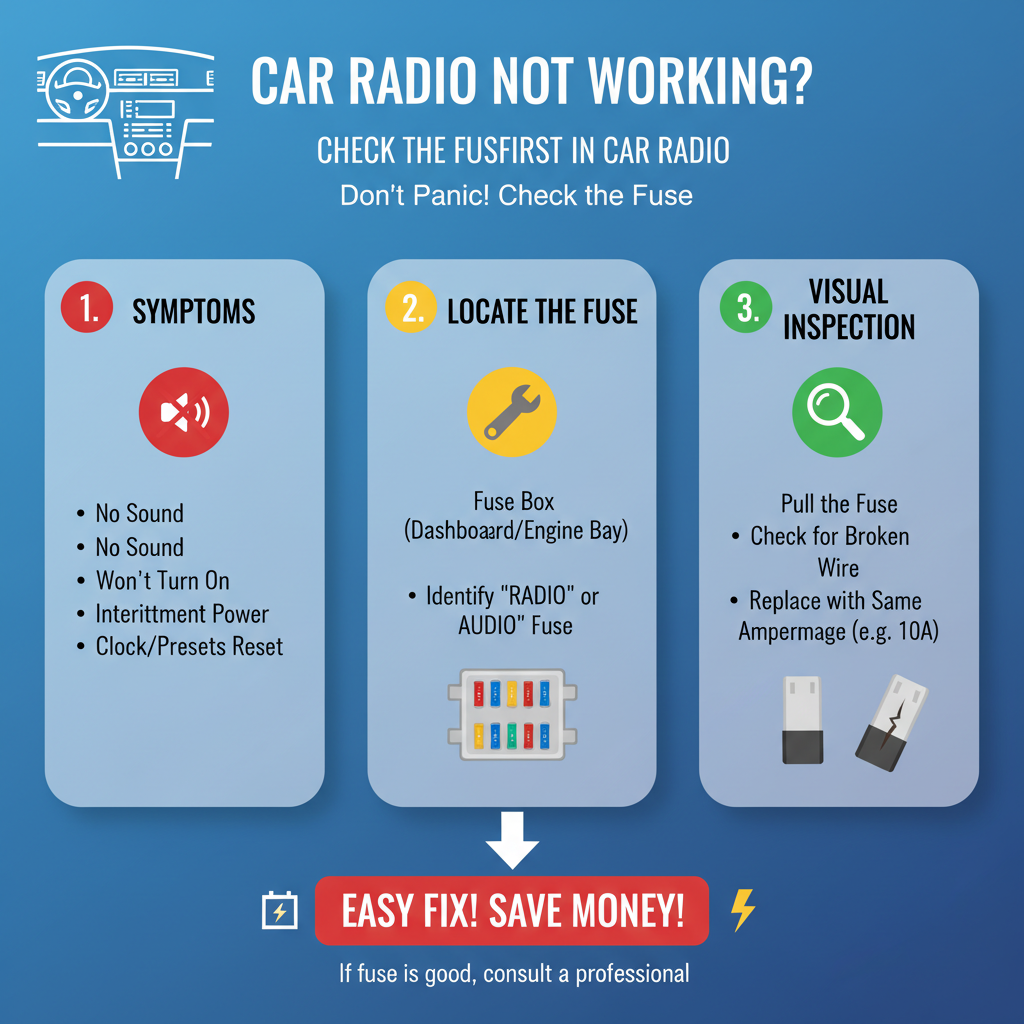
The radio fuse is the most common culprit when your car stereo suddenly stops working. This small component protects your radio from electrical surges and often fails before more expensive parts get damaged.
Locate your vehicle’s fuse box, typically found under the dashboard or in the engine compartment. Your owner’s manual will show the exact location and fuse diagram. Look for a fuse labeled “Radio,” “Audio,” or “Stereo.”
Remove the suspected fuse using needle-nose pliers or the fuse puller tool usually stored in the fuse box. A blown fuse will have a broken metal strip visible through the clear plastic casing. Replace it with an identical amperage fuse and test your radio.
Inspect Power and Ground Connections
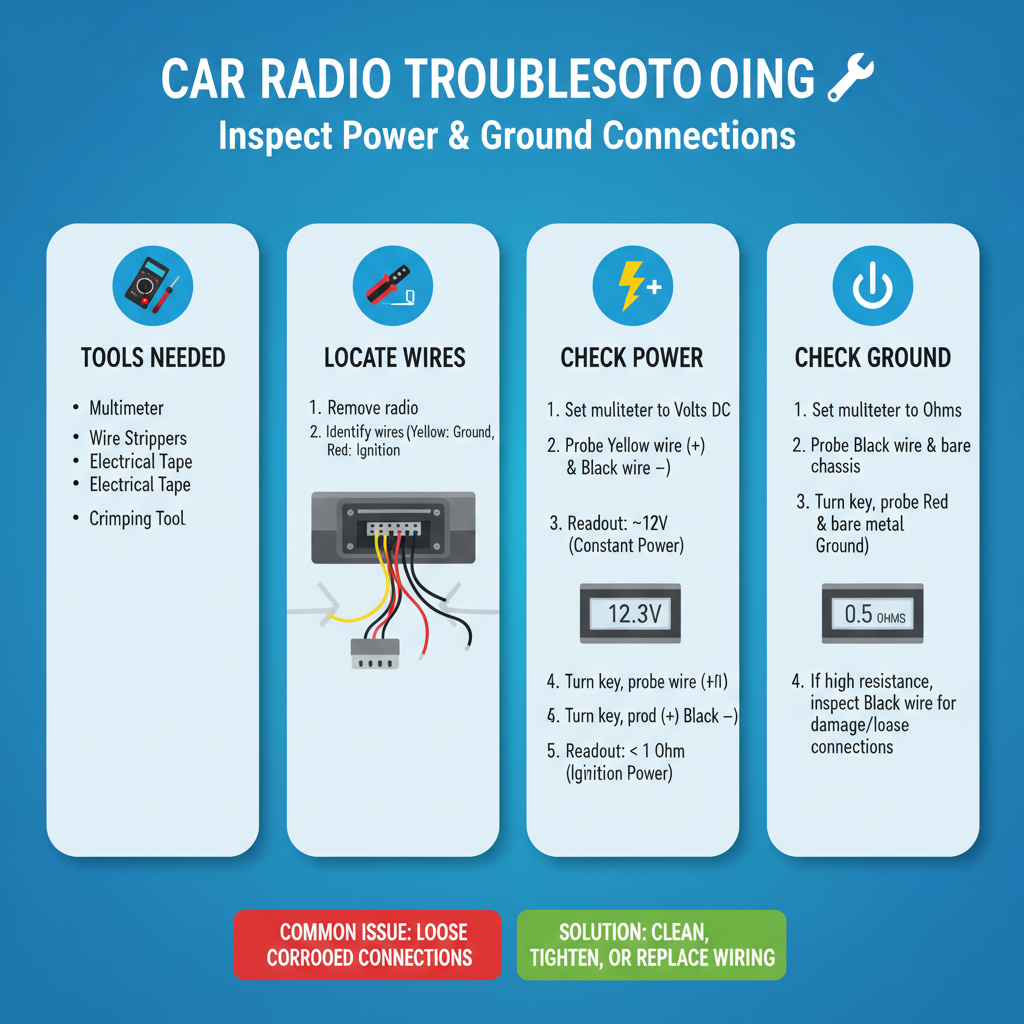
Loose or corroded wiring connections frequently cause intermittent radio problems or complete failures. These issues often develop gradually as connections work loose from vehicle vibration or corrosion builds up over time.
Start by checking the power connection behind your radio unit. You’ll need to remove the radio from the dashboard, which typically involves removing trim panels and unscrewing mounting brackets. The main power wire is usually red or yellow and should show 12 volts when tested with a multimeter.
Ground connections are equally important and often overlooked. The black ground wire must have a solid connection to the vehicle’s metal frame. Clean any corrosion from ground points using sandpaper and ensure connections are tight.
Test Your Antenna System
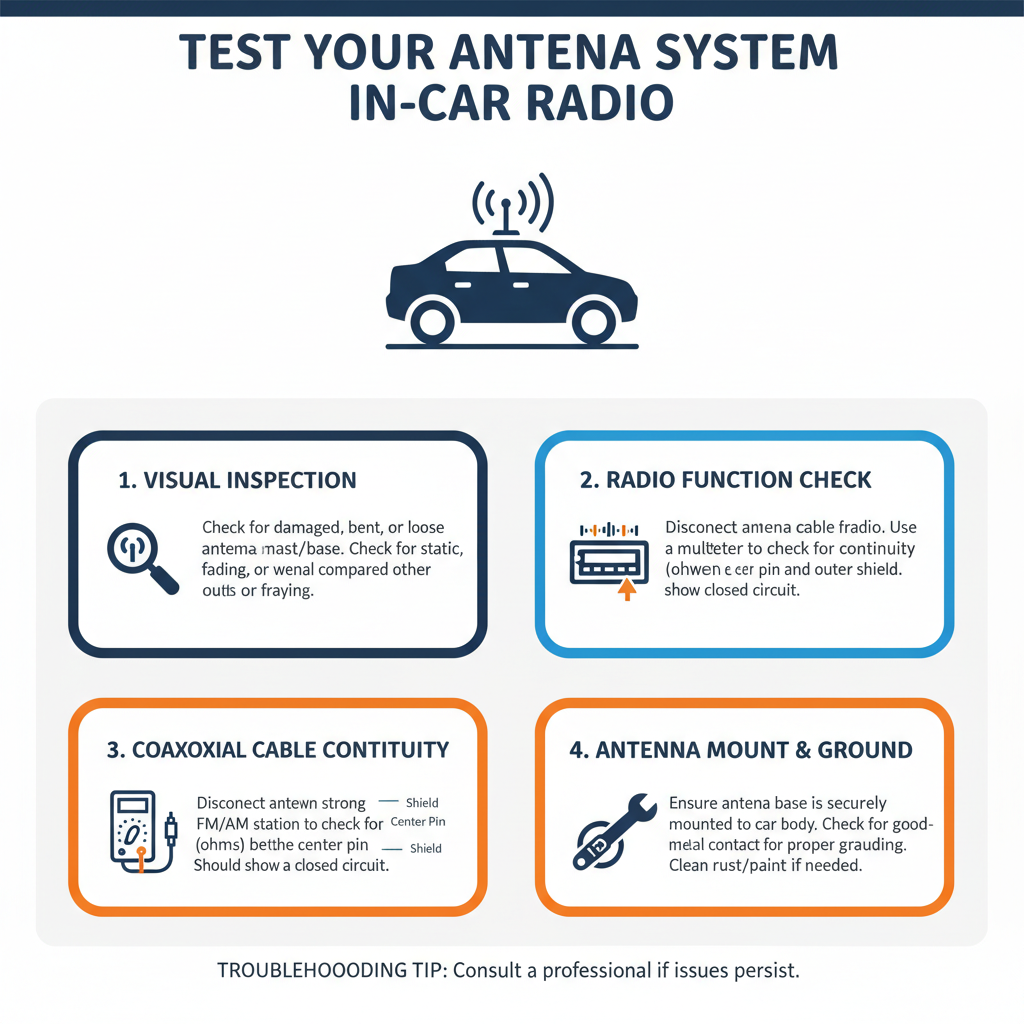
A faulty antenna system will cause poor reception or complete signal loss, making it seem like your radio isn’t working properly. Modern vehicles use various antenna types, from traditional telescoping units to integrated rear window designs.
Check external antennas for physical damage, corrosion, or loose connections at the base. The antenna cable connection at the back of your radio should be secure and free from corrosion. A loose antenna connection often causes crackling sounds or intermittent reception.
For vehicles with rear window antennas, inspect the thin wire grid lines on the glass. Broken lines can be repaired using conductive paint available at auto parts stores, though this requires careful application.
Diagnose Display and Control Issues
Sometimes the radio works but displays incorrectly or responds poorly to controls. These symptoms often indicate internal component failures rather than simple electrical problems.
If your radio powers on but shows garbled text, blank screens, or incorrect information, the display unit may be failing. This is common in older vehicles where LCD screens deteriorate over time. Temperature extremes accelerate this process.
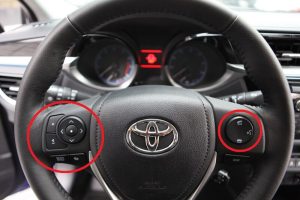
Unresponsive buttons or controls that stick often result from dirt, spilled liquids, or worn contact points. Professional cleaning can sometimes restore function, but severely damaged control circuits typically require radio replacement.
Address Power Supply Problems
Insufficient power supply causes various radio malfunctions, from weak audio output to complete shutdowns. These issues become more common as vehicle electrical systems age and develop resistance in connections.
Use a multimeter to measure voltage at your radio’s power connections. You should see approximately 12 volts with the ignition on. Significantly lower readings indicate wiring problems or a failing alternator affecting the entire electrical system.
Battery-related power issues often manifest as radio memory loss, where stations and settings reset each time you start the vehicle. This suggests the constant power wire has lost connection or the radio’s internal backup system has failed.
When Professional Help Is Needed
Complex radio problems involving internal circuit failures, advanced security systems, or integrated vehicle networks require professional diagnosis. Modern vehicles often have radios that communicate with other systems, making replacement more complicated than simple aftermarket installations.
Factory security features can lock out radios that lose power, requiring special unlock codes or dealer programming. Attempting to bypass these systems without proper knowledge can cause permanent damage or trigger other vehicle security measures.
If multiple electrical systems fail simultaneously with your radio, the problem likely involves the vehicle’s main electrical system rather than just the radio unit. This scenario requires comprehensive electrical system diagnosis by qualified technicians.
Prevention and Maintenance Tips
Regular maintenance prevents many common radio problems and extends equipment life. Simple preventive measures save money and avoid frustrating breakdowns during important trips.
Keep your vehicle’s electrical connections clean and tight during routine maintenance. Check battery terminals monthly and clean any corrosion immediately. Poor battery connections affect the entire electrical system, including your radio.
Protect your radio from temperature extremes when possible. Park in shade during hot weather and avoid leaving the radio on when the engine isn’t running, as this drains the battery and stresses electrical components.
Frequently Asked Questions
Why did my car radio stop working after I jumped my battery?
Jumping a battery can cause voltage spikes that blow the radio fuse or damage sensitive electronics. Check the radio fuse first, then inspect wiring connections for any signs of damage from the electrical surge.
Can a dead car battery cause radio problems?
Yes, a weak or failing battery can cause radio malfunctions including memory loss, poor performance, and intermittent operation. The radio needs stable 12-volt power to function properly, and battery problems affect the entire electrical system.
How much does it cost to fix a car radio that won’t turn on?
Simple fixes like replacing a blown fuse cost under $5. Professional diagnosis typically runs $100-150, while radio replacement ranges from $200-800 depending on the vehicle and radio type. Many problems can be resolved with basic troubleshooting.
Why does my radio work sometimes but not others?
Intermittent radio operation usually indicates loose connections, corroded wiring, or failing internal components. Temperature changes often trigger these problems as connections expand and contract, making contact issues more apparent.
Can I fix my car radio myself?
Basic troubleshooting like checking fuses and connections is safe for most people. However, removing dashboard components and working with electrical systems requires mechanical knowledge and proper tools. Complex repairs should be left to professionals.
What tools do I need to troubleshoot my car radio?
Essential tools include a multimeter for testing electrical connections, basic hand tools for removing panels, needle-nose pliers for handling fuses, and your vehicle’s owner manual for reference. Most basic diagnosis requires only these common items.
How do I know if my radio needs to be replaced?
Replace your radio when repair costs exceed replacement value, multiple internal systems fail simultaneously, or the unit no longer meets your needs. Signs of terminal failure include complete power loss despite good electrical connections and extensive physical damage.
Most car radio problems have straightforward solutions that don’t require expensive professional repairs. Start with the simplest checks like fuses and connections before moving to more complex diagnosis. Regular maintenance and prompt attention to small problems prevent major failures and keep your audio system working reliably for years. Remember that safety comes first when working with vehicle electrical systems, and don’t hesitate to seek professional help when problems exceed your comfort level or expertise.