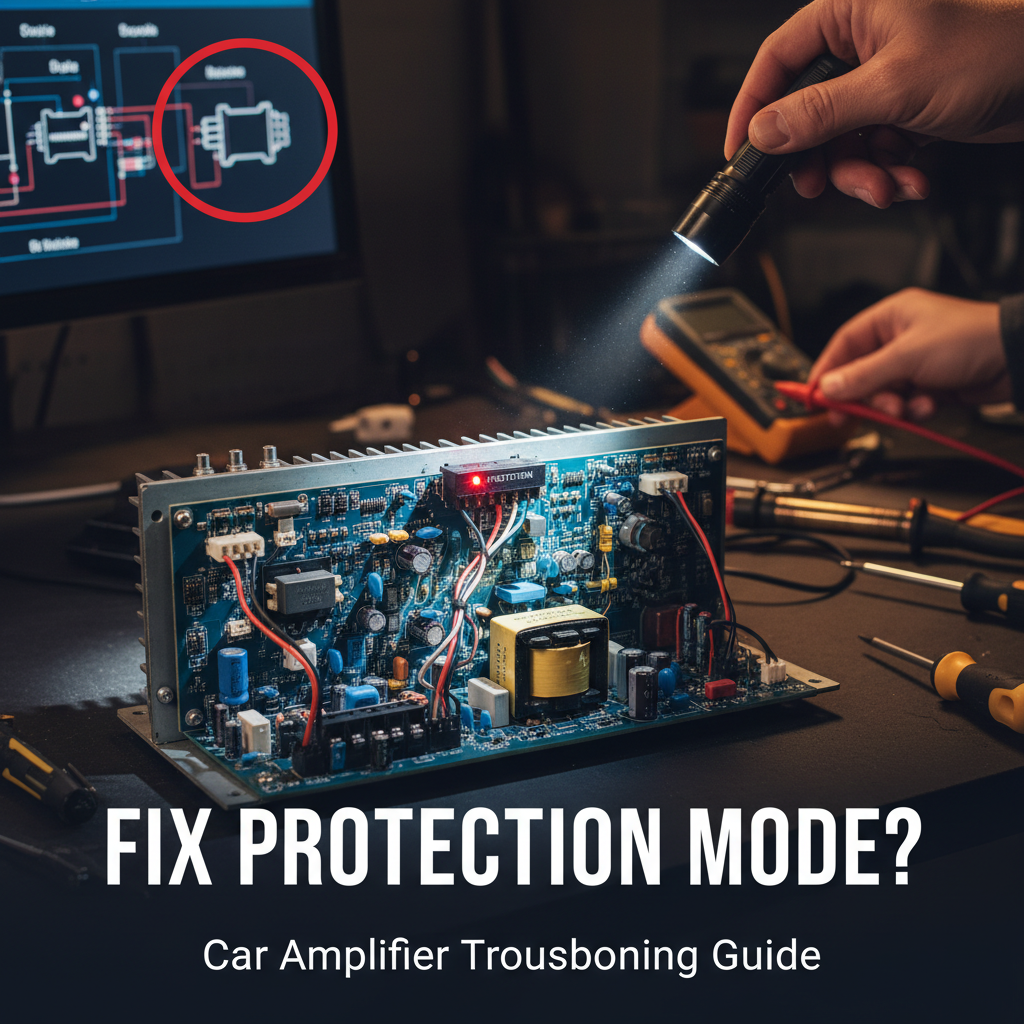
When your car amplifier enters protection mode, it’s essentially shutting itself down to prevent damage from electrical issues or overheating. This safety feature can be frustrating when your music suddenly cuts out, but understanding why it happens and how to fix it will get your sound system back up and running.
Protection mode occurs when your amplifier detects potentially harmful conditions like overheating, short circuits, or impedance problems. The good news is that most protection mode issues can be resolved with systematic troubleshooting and basic tools.
Contents
Understanding Why Amplifiers Enter Protection Mode
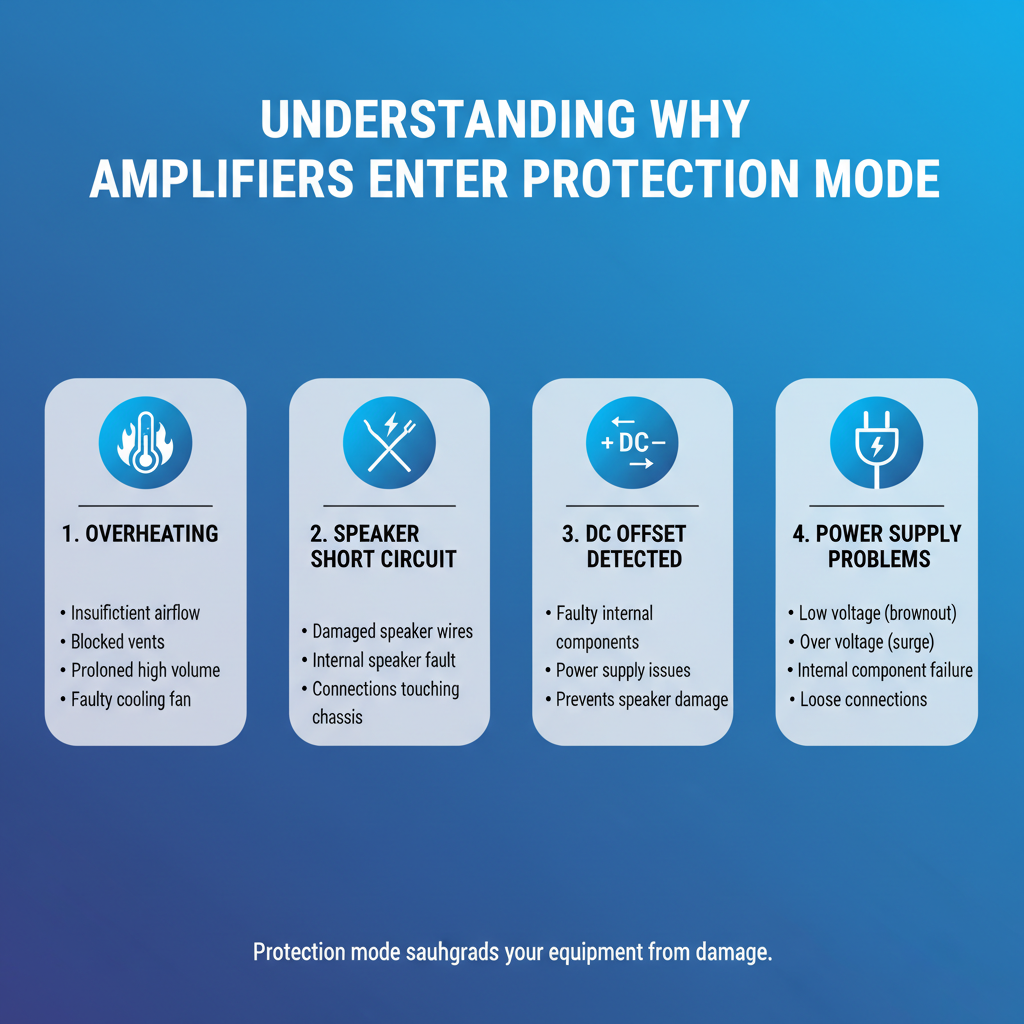
Your car amplifier’s protection circuit acts like a circuit breaker in your home. When it senses dangerous conditions, it immediately shuts down to prevent permanent damage to expensive components.
Common triggers include overheating from poor ventilation, wiring problems that create short circuits, speaker impedance mismatches, or power supply issues. Sometimes even a loose connection can cause intermittent protection mode activation.
The protection light or indicator on your amplifier will typically turn red or amber when this happens. Some amplifiers like the Alpine MRV-F300 display specific error codes that help identify the exact problem.
Step-by-Step Troubleshooting Process
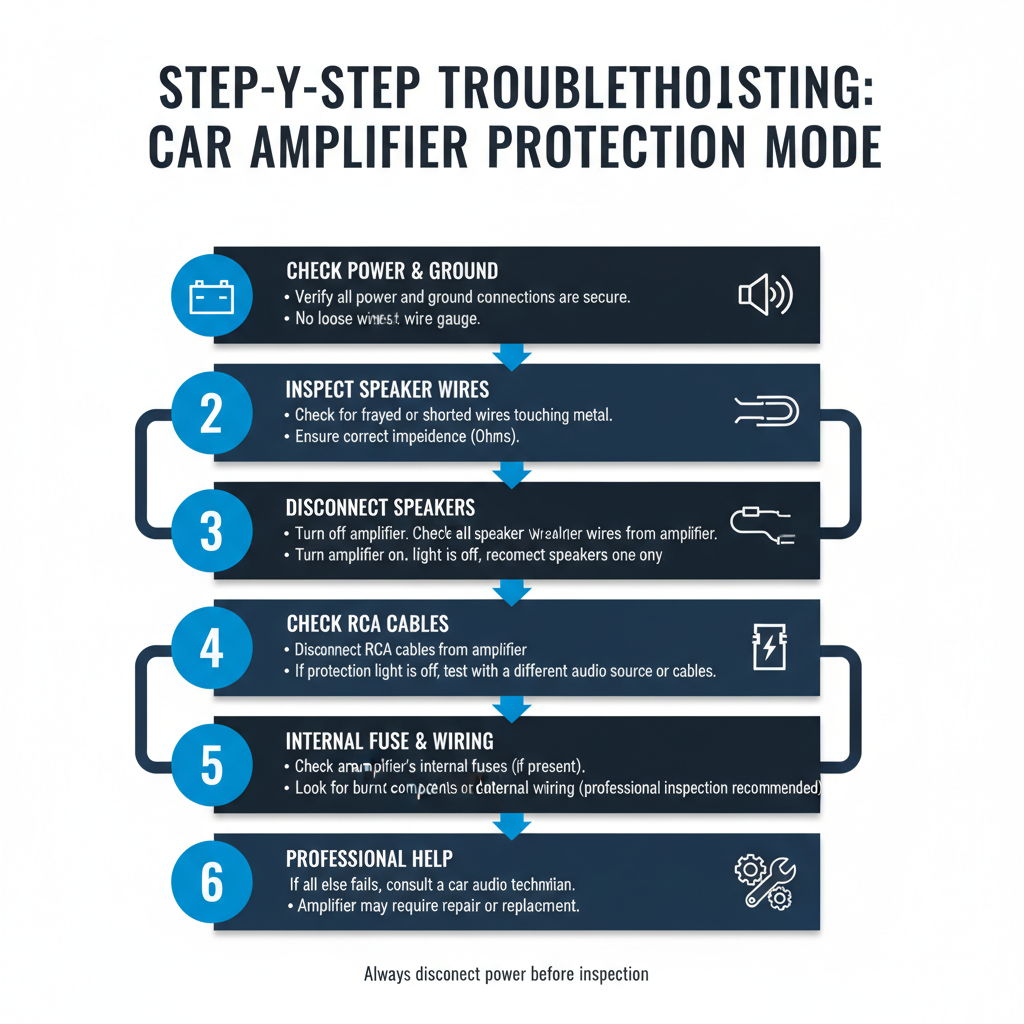
Check Power Connections First
Start with the most basic checks before diving into complex diagnostics. Turn off your car and disconnect the amplifier’s power cable at the battery terminal.
Inspect the power wire for any signs of damage, melting, or loose connections. The connection at the battery should be tight and corrosion-free. Check that your fuse hasn’t blown – a blown fuse often indicates a more serious underlying problem.
Examine the ground connection carefully. A poor ground is one of the most common causes of protection mode issues. The ground wire should connect to bare metal on the vehicle’s chassis, not painted surfaces or plastic components.
Inspect Speaker Wiring and Connections
Disconnect all speaker wires from your amplifier’s output terminals. If the protection light turns off after removing speaker connections, you’ve identified the problem area.
Check each speaker wire for damage, especially where they pass through metal panels or near moving parts. Look for exposed copper wire that might be touching the vehicle’s metal frame, creating a short circuit.
Test speaker impedance with a multimeter if you have one available. Most car speakers should read between 2-8 ohms. A reading of zero ohms indicates a short circuit, while infinite resistance suggests an open circuit.
Examine Amplifier Ventilation and Temperature
Feel around your amplifier’s mounting location for excessive heat buildup. Amplifiers need adequate airflow to operate properly, especially high-power models like the Rockford Fosgate R500X1D that generate significant heat during operation.
Remove any objects blocking ventilation holes or heat sinks. If your amplifier is mounted in an enclosed space, consider relocating it or adding ventilation fans.
Clean dust and debris from heat sinks using compressed air. Accumulated dirt acts as insulation, preventing proper heat dissipation.
Advanced Diagnostic Techniques
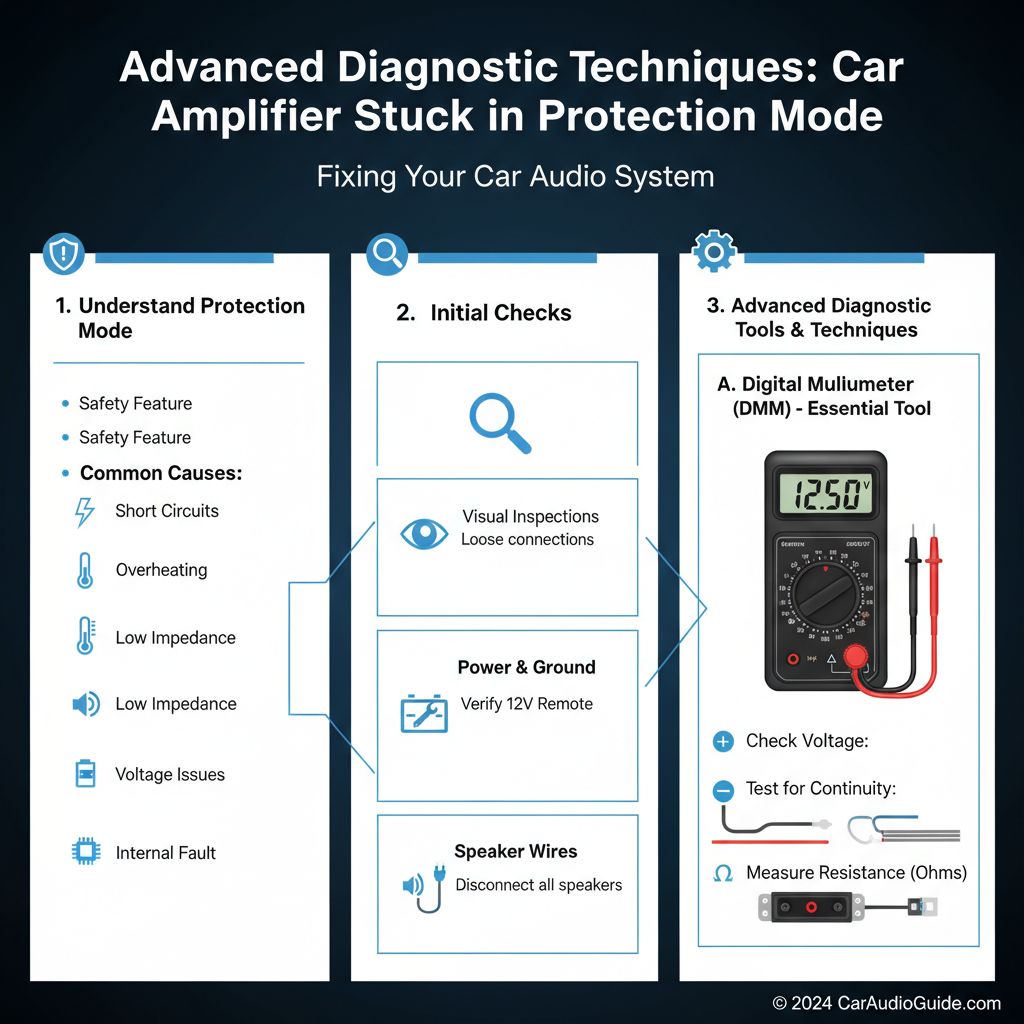
Testing Individual Components
Once you’ve ruled out basic wiring issues, test components systematically. Start by connecting just one speaker to verify the amplifier can operate without entering protection mode.
If one speaker works fine, add speakers one at a time until the protection mode triggers. This process helps identify which speaker or wire is causing problems.
For subwoofer amplifiers, pay special attention to impedance matching. Connecting multiple subwoofers incorrectly can create impedance loads that trigger protection circuits.
Checking Signal Input Issues
Sometimes protection mode results from problems with the input signal rather than power or speaker connections. Disconnect RCA cables or high-level inputs and see if the amplifier stays operational.
Try different input sources to isolate whether the problem lies with your head unit’s outputs or the amplifier’s input circuits. Damaged RCA cables can introduce noise or DC voltage that triggers protection modes.
Common Wiring Problems and Solutions
Short Circuit Detection
Short circuits often occur where wires rub against sharp metal edges or where insulation has worn away. Pay particular attention to areas where wires pass through firewalls or door jambs.
Use electrical tape or wire loom to protect exposed areas. Replace any wire sections with damaged insulation rather than simply wrapping them with tape.
Impedance Mismatch Issues
Connecting speakers with incorrect impedance can overload your amplifier. Most car amplifiers are designed for 4-ohm loads, though some can handle 2-ohm configurations.
Calculate total impedance carefully when wiring multiple speakers. Parallel connections decrease total impedance, while series connections increase it. Many installers use impedance calculators or apps to verify their wiring configurations.
Ground Loop Problems
Ground loops can cause protection mode activation in some amplifiers. These occur when multiple components share ground connections that have different electrical potentials.
The solution involves ensuring all audio components share the same ground point, preferably within 18 inches of each other on the vehicle’s chassis.
Heat-Related Protection Issues
Improving Amplifier Cooling
Amplifiers like the JL Audio XD400/4v2 include sophisticated thermal protection that gradually reduces power output as temperatures rise. While this prevents damage, it also reduces performance.
Mount amplifiers on metal surfaces when possible, as metal conducts heat away more effectively than plastic or carpet. Ensure at least 2-3 inches of clearance around ventilation areas.
Consider adding computer-style cooling fans for high-power installations in hot climates or enclosed spaces. These fans should activate automatically using temperature switches.
Recognizing Thermal Shutdown
Thermal protection often occurs gradually rather than immediately. You might notice reduced bass output or distortion before complete shutdown.
If your amplifier feels extremely hot to the touch, allow it to cool completely before attempting to restart. Repeated thermal cycling can damage internal components over time.
When to Seek Professional Help
Some protection mode issues require specialized diagnostic equipment or component-level repair skills. If you’ve systematically checked all connections, wiring, and basic components without success, professional diagnosis may be necessary.
Internal component failures, such as damaged output transistors or protection circuit malfunctions, typically require bench repair or replacement. Attempting to bypass protection circuits is dangerous and can result in expensive damage.
Intermittent protection mode issues that occur randomly can be particularly challenging to diagnose and may require professional oscilloscope testing to identify.
Prevention and Maintenance Tips
Regular maintenance prevents many protection mode issues. Inspect connections annually, especially in harsh climates where corrosion occurs more rapidly.
Keep amplifier mounting areas clean and free from debris. Check that mounting screws remain tight, as vibration can loosen connections over time.
Monitor your system’s performance for early warning signs like reduced output, distortion, or intermittent operation. Addressing small problems early prevents more serious issues later.
Conclusion
Fixing a car amplifier stuck in protection mode requires systematic troubleshooting starting with basic power and ground connections, then progressing to speaker wiring and thermal issues. Most problems stem from wiring issues, poor connections, or inadequate ventilation rather than amplifier component failures.
Take your time during diagnosis and address one potential cause at a time. This methodical approach will help you identify the root cause without creating additional problems. Remember that protection mode exists to prevent damage, so never attempt to bypass these safety circuits.
With patience and basic electrical knowledge, most protection mode issues can be resolved without professional help, getting your car audio system back to delivering the performance you expect.
Frequently Asked Questions
Why does my amplifier go into protection mode only when the bass hits hard?
This typically indicates either inadequate power supply wiring, speaker impedance problems, or thermal issues. High bass frequencies demand more current, exposing marginal connections or undersized wiring.
Can a bad head unit cause amplifier protection mode?
Yes, head units with damaged outputs can send DC voltage or excessive signal levels that trigger amplifier protection circuits. Try disconnecting the input signal to test this possibility.
How long should I wait before restarting an amplifier after thermal shutdown?
Allow at least 15-30 minutes for complete cooling. The heat sink and internal components need time to return to safe operating temperatures.
Is it safe to drive with my amplifier in protection mode?
Yes, protection mode doesn’t affect vehicle safety, but you won’t have audio from that amplifier. However, you should address the underlying problem promptly to prevent potential damage.