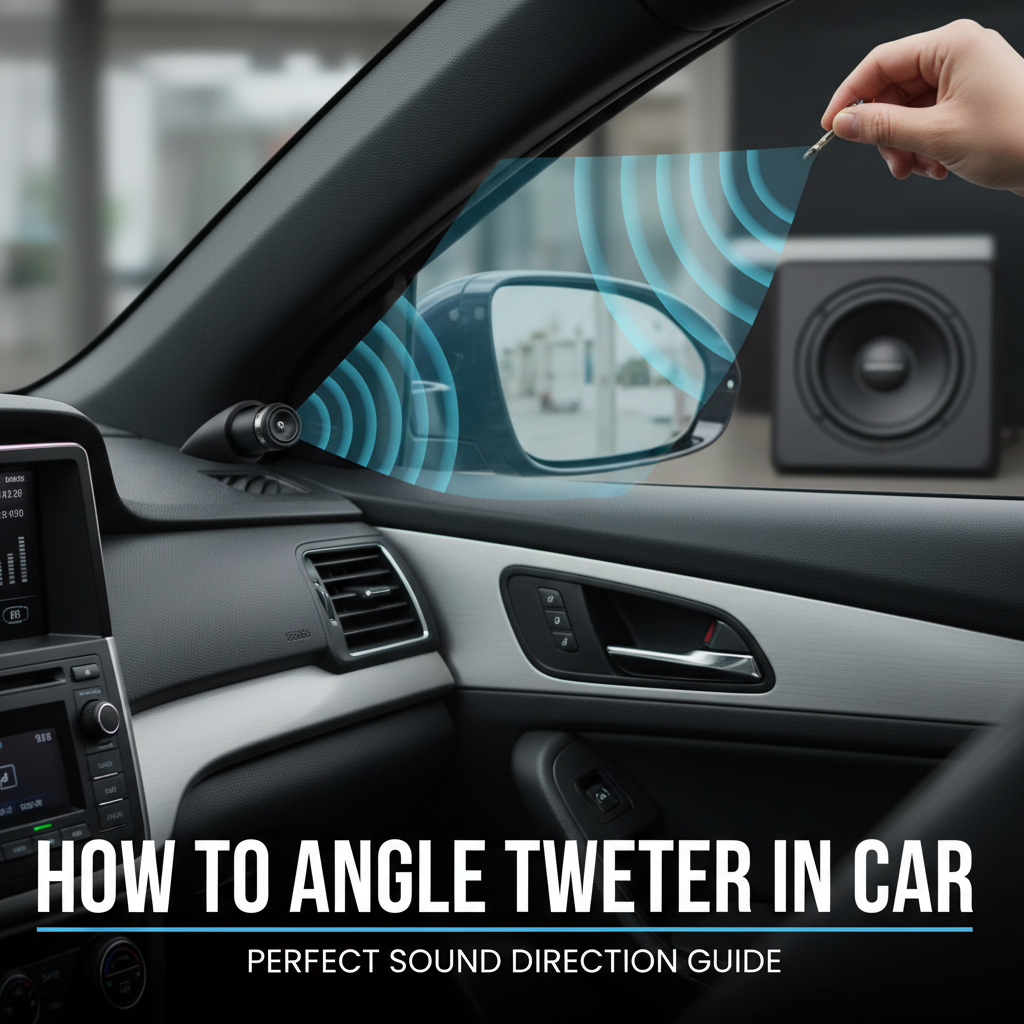
Getting the best sound from your car audio system depends heavily on proper tweeter positioning. While many drivers overlook this crucial detail, the angle of your tweeters can dramatically impact your listening experience.
Angle your car tweeters 15-30 degrees toward the opposite ear of each listener. The left tweeter should point toward the right ear, and the right tweeter toward the left ear. This creates optimal stereo imaging and prevents harsh, direct high-frequency sounds while maintaining clarity and detail.
Contents
Why Tweeter Angle Matters
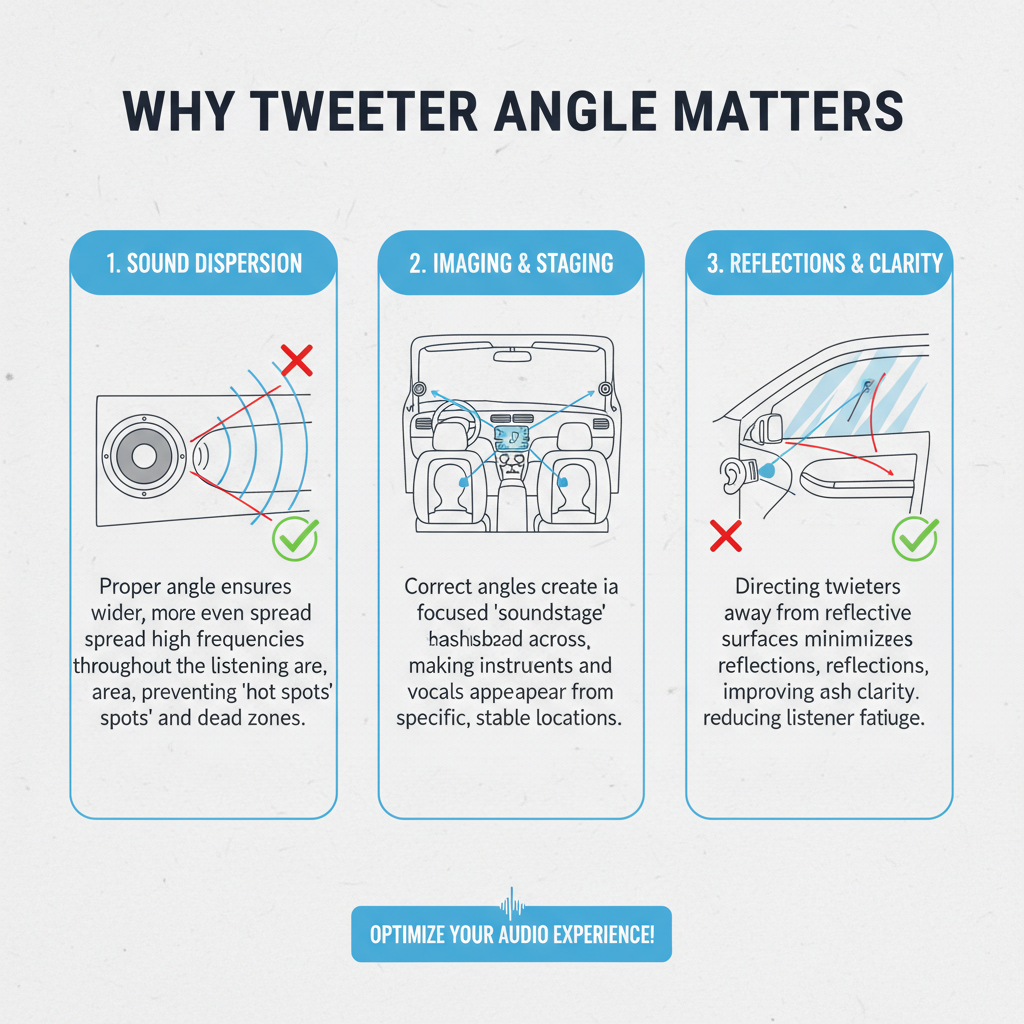
Tweeters produce high-frequency sounds that are highly directional. Unlike bass frequencies that spread in all directions, treble sounds travel in straight lines.
Poor tweeter angling creates several problems:
– Harsh, fatiguing sound
– Poor stereo imaging
– Uneven frequency response
– Reduced soundstage width
Proper angling solves these issues by creating a balanced, natural sound that doesn’t assault your ears during long drives.
Step-by-Step Tweeter Angling Guide
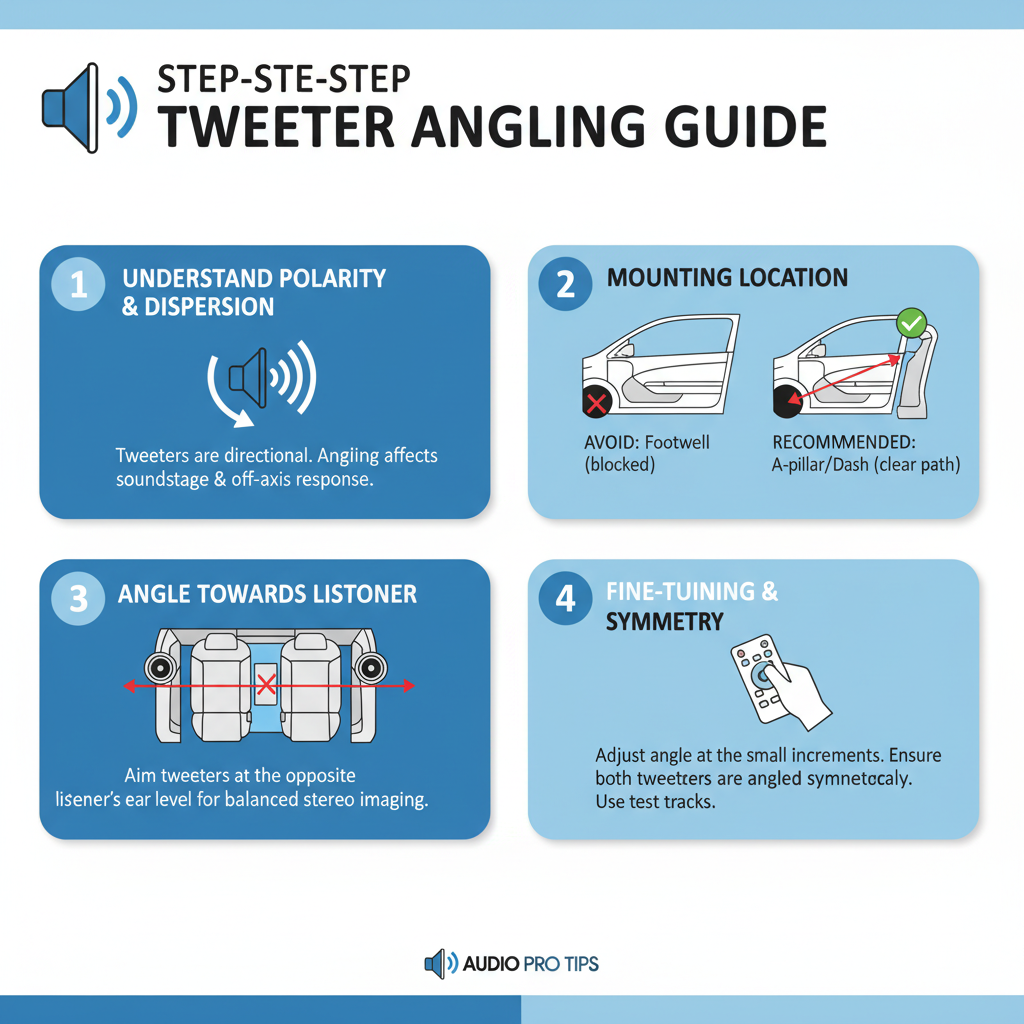
Step 1: Determine Your Listening Position
Sit in your normal driving position. Note where your ears are positioned relative to the tweeters. Most factory and aftermarket tweeters mount in the dashboard, door panels, or A-pillars.
Step 2: Apply the Basic Angling Rule
For the driver: Angle the left tweeter toward your right ear and the right tweeter toward your left ear.
For passenger optimization: If you frequently carry passengers, angle tweeters to create a compromise between driver and passenger positions.
Step 3: Set the Initial Angle
Start with a 20-degree angle as your baseline. This works for most car interiors and seating positions.
Step 4: Fine-Tune Through Listening
Play familiar music with clear vocals and instruments. Adjust the angle in small increments while listening for:
– Natural vocal reproduction
– Clear instrument separation
– Comfortable treble levels
– Wide soundstage
Common Tweeter Mounting Locations and Angles
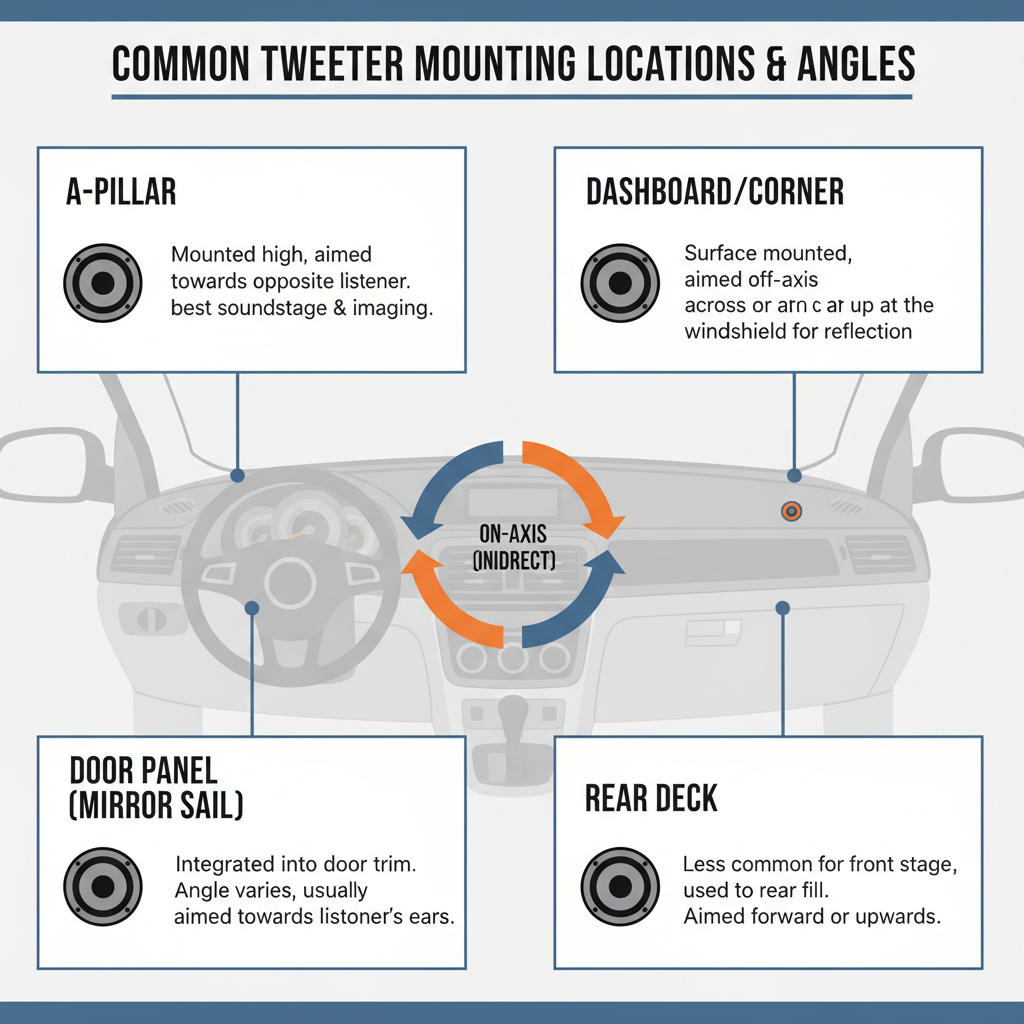
Dashboard Mounting
Dashboard-mounted tweeters typically need 15-25 degrees of angling. The close proximity to listeners requires less extreme angles.
Popular aftermarket options like Focal TN-47 and Morel MT-190 work well in dashboard locations when properly angled.
Door Panel Mounting
Door-mounted tweeters often require 25-35 degrees of angling due to their lower position relative to ear level.
A-Pillar Mounting
A-pillar mounting offers the most flexibility for angling. These positions typically work best with 20-30 degrees of angle adjustment.
Component systems like JL Audio C2-650 and Alpine SPR-60C often include adjustable tweeters perfect for A-pillar installations.
Tools and Techniques for Precise Angling
Adjustable Tweeter Mounts
Many aftermarket tweeters include swivel mounts or adjustable housings. These make angle adjustments simple and reversible.
Measuring Angles
Use a protractor or angle finder app on your smartphone to measure precise angles. This helps maintain consistency between left and right sides.
Temporary Testing
Before permanent installation, use removable mounting putty or tape to test different angles. This saves time and prevents damage to your interior.
Advanced Angling Considerations
Time Alignment
Proper tweeter angling works hand-in-hand with time alignment settings on advanced head units. Systems like Pioneer DEH-80PRS and Kenwood Excelon DNX995S offer time alignment features that complement proper physical positioning.
Crossover Settings
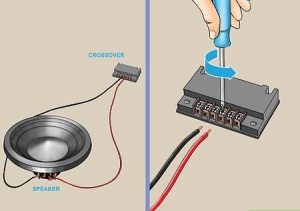
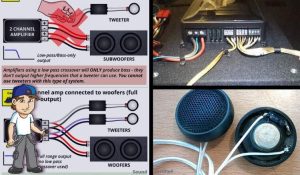
Adjust your crossover frequency based on tweeter angle. More aggressive angles may require slight crossover adjustments to maintain tonal balance.
Interior Acoustics
Consider your car’s interior materials and shape. Hard surfaces reflect high frequencies, while soft materials absorb them. Adjust angles accordingly.
Troubleshooting Common Issues
Harsh or Bright Sound
If tweeters sound harsh after angling:
– Reduce the angle slightly
– Check crossover settings
– Verify tweeter phase
Poor Stereo Imaging
For narrow or unfocused imaging:
– Increase angling toward opposite ears
– Check left/right balance
– Verify both tweeters are working
Inconsistent Sound Between Seats
When sound varies dramatically between driver and passenger positions:
– Compromise on angle settings
– Consider dual-tweeter setups
– Adjust fade settings
Professional Installation vs. DIY
DIY Installation Benefits
– Cost savings
– Learning experience
– Ability to fine-tune over time
When to Go Professional
Consider professional installation for:
– Complex component systems
– Custom mounting requirements
– Integration with factory systems
Professional installers have experience with specific vehicles and can achieve optimal results with systems like Hertz Mille Pro or Dynaudio Esotan that require precise setup.
Measuring Your Results
Listening Tests
Use these reference tracks to evaluate your tweeter angling:
– Acoustic vocals for natural reproduction
– Classical music for instrument separation
– Electronic music for detail retrieval
Frequency Response Apps
Smartphone apps can measure frequency response, though professional RTA equipment provides more accurate results.
Long-Term Evaluation
Live with your settings for at least a week before making major changes. Your ears need time to adjust to new positioning.
FAQ
Q: Should both tweeters be angled the same amount?
A: Yes, maintain symmetrical angles for balanced stereo imaging. Both tweeters should angle the same degrees toward the opposite ear.
Q: Can I angle tweeters too much?
A: Yes, excessive angling (over 45 degrees) can create an unnatural sound and reduce overall output. Stick to 15-35 degrees for best results.
Q: Do factory tweeters need angling?
A: Many factory tweeters benefit from angling, but modification may void warranties. Consider aftermarket replacements for better adjustability.
Q: How do I angle tweeters without adjustable mounts?
A: Use angled spacers, shims, or custom brackets. Some installers create angled mounting surfaces using foam or wood spacers.
Q: Should tweeter angle change with volume levels?
A: No, once properly set, tweeter angles shouldn’t require adjustment for different volume levels. If they do, check your crossover settings.
Q: Do coaxial speakers need angling considerations?
A: Coaxial speakers with built-in tweeters can benefit from angling, but options are limited since the tweeter position is fixed relative to the woofer.
Q: How often should I readjust tweeter angles?
A: Once properly set, tweeter angles rarely need adjustment unless you change seating positions, upgrade components, or modify your interior.
Key Takeaways
Proper tweeter angling transforms your car audio experience from harsh and fatiguing to smooth and engaging. Start with 20 degrees toward the opposite ear, then fine-tune based on your specific vehicle and preferences.
Remember that angling is just one part of a complete audio system setup. Combine proper positioning with quality components, appropriate crossover settings, and careful installation for the best results.
Take time to experiment and trust your ears. The perfect angle creates natural, comfortable sound that you can enjoy for hours of driving without fatigue.