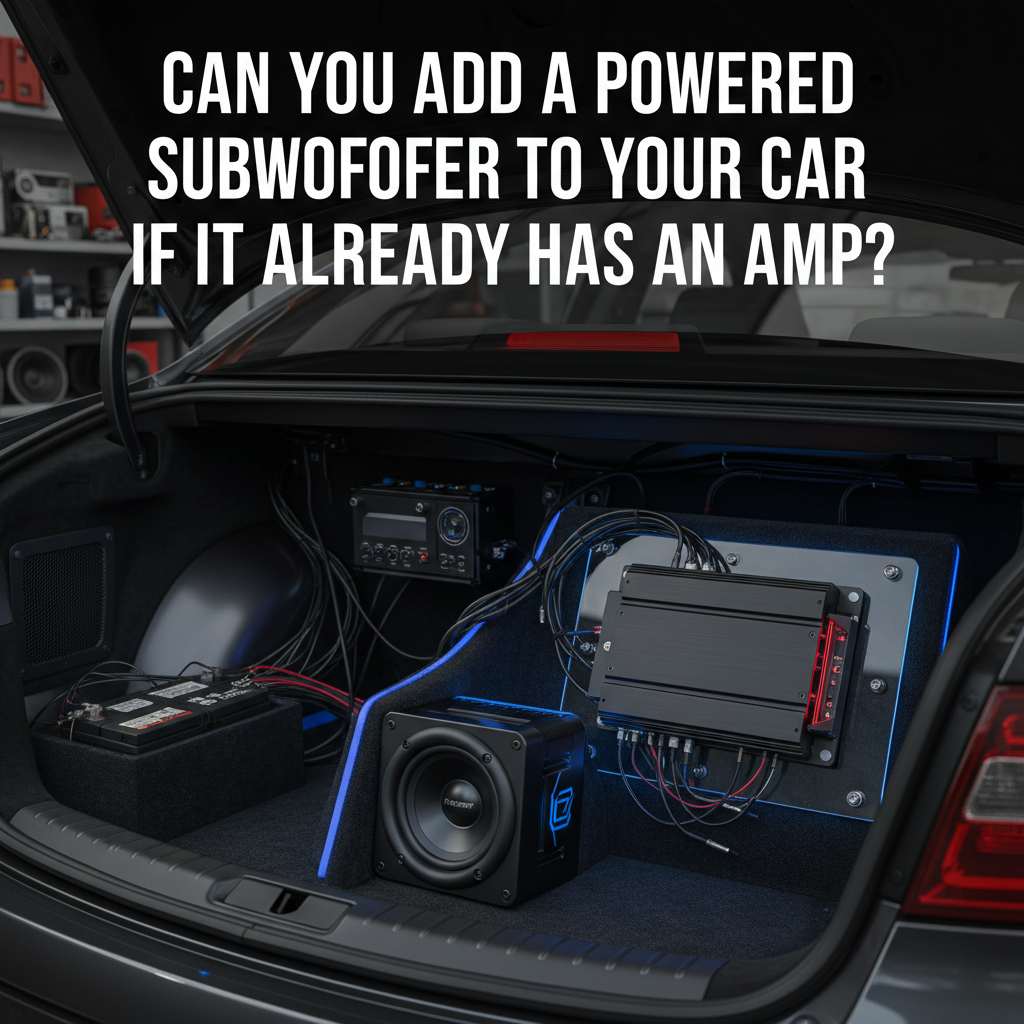
Yes, you can absolutely add a powered subwoofer to a car that already has an amplifier. The key is understanding signal routing, impedance matching, and power distribution to avoid damaging your existing audio components while maximizing bass performance.
Modern car audio systems with factory or aftermarket amplifiers provide multiple integration pathways for powered subwoofers. The process requires careful consideration of your existing amplifier’s capabilities, available signal sources, and electrical system capacity.
Contents
- Explaining Your Current Amplified System Configuration
- Signal Source Options for Powered Subwoofer Integration
- Electrical System Considerations and Power Management
- Installation Methods and Best Practices
- Crossover Configuration and Frequency Management
- Compatibility Assessment Table
- Troubleshooting Common Integration Issues
- Professional Installation vs. DIY Considerations
- Frequently Asked Questions
- Maximizing Your Enhanced Audio System
Explaining Your Current Amplified System Configuration
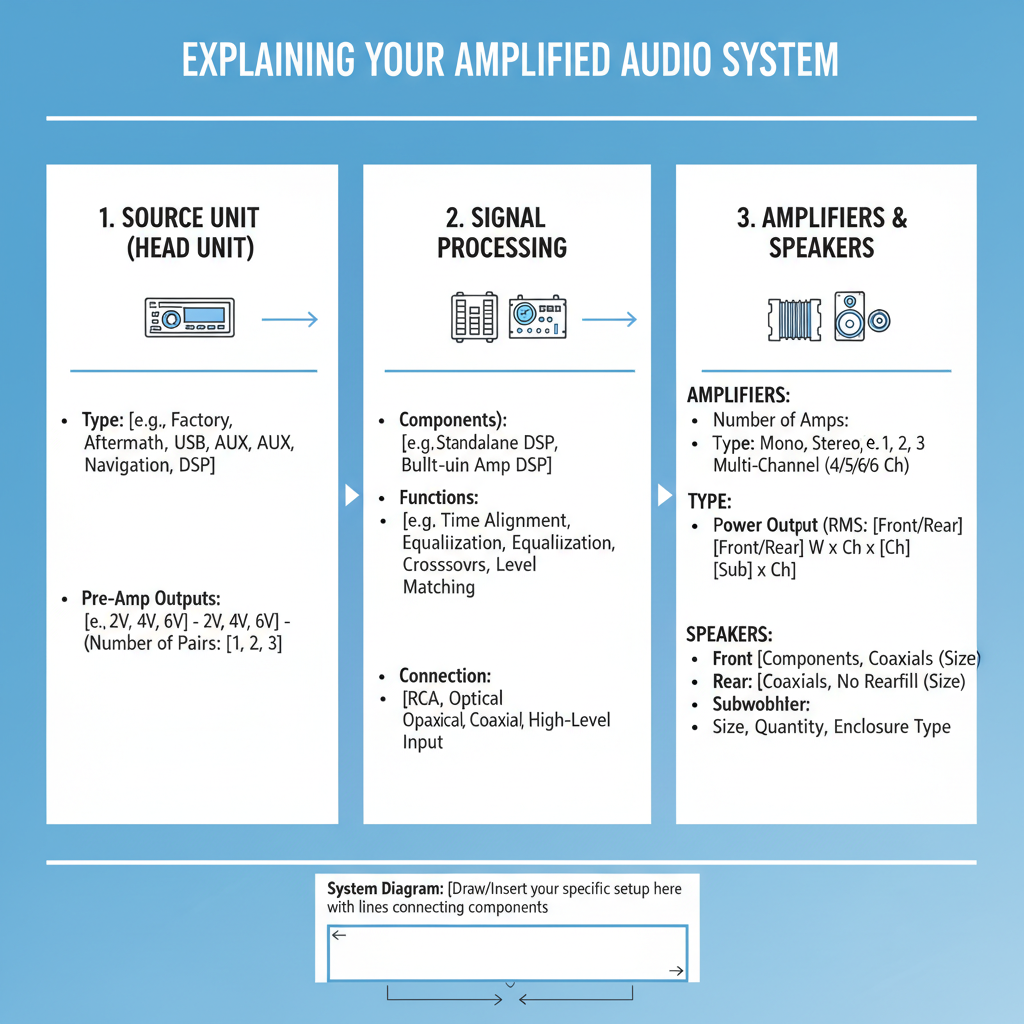
Most vehicles with existing amplifiers fall into three categories: factory premium systems, aftermarket head unit installations, or custom multi-amplifier setups. Each configuration presents unique opportunities and challenges for subwoofer integration.
Factory premium systems typically use dedicated amplifiers for specific frequency ranges. These systems often include digital signal processing (DSP) that can complicate subwoofer integration. Aftermarket installations usually offer more flexibility through pre-amp outputs and signal flexibility.
The critical factor is identifying available signal sources without disrupting your current amplifier’s operation. Most installations succeed by tapping into pre-amplified signals rather than speaker-level outputs.
Signal Source Options for Powered Subwoofer Integration
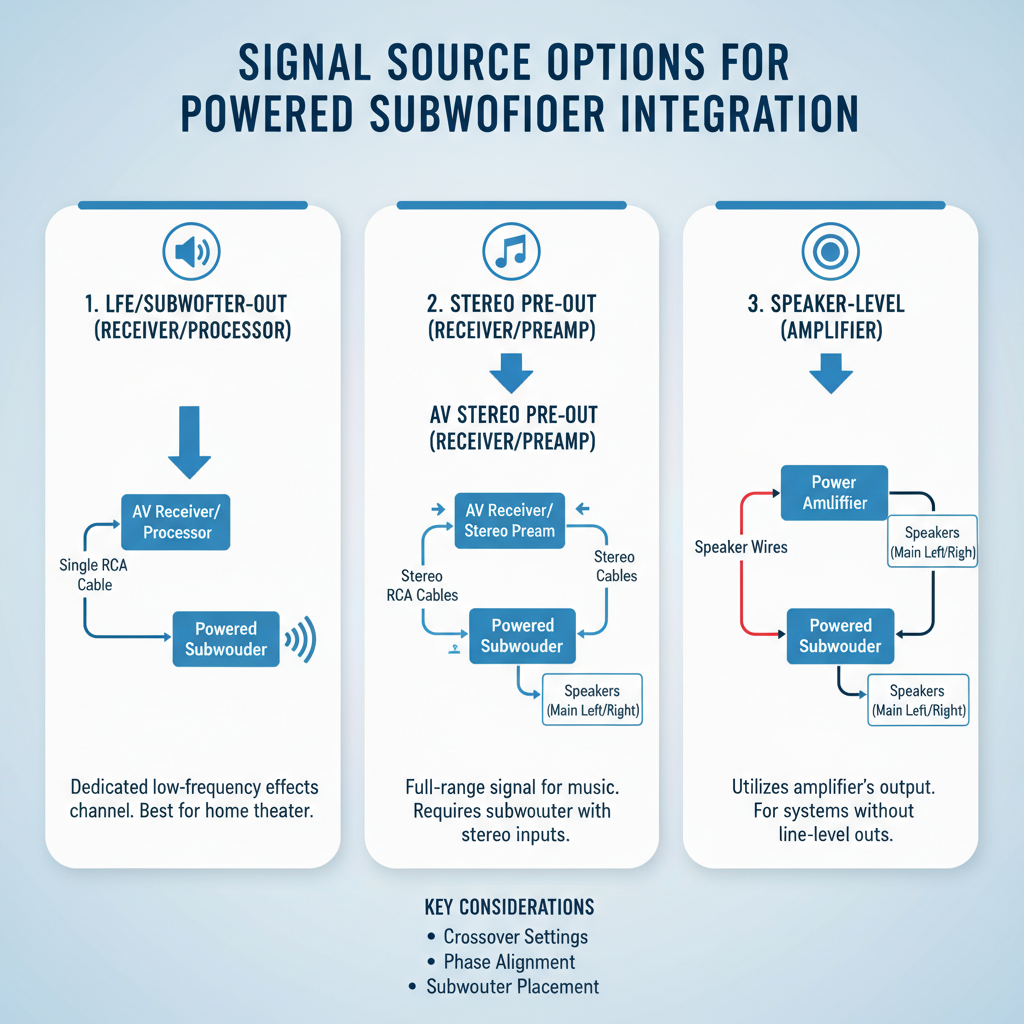
High-Level Input Method
High-level inputs allow powered subwoofers to receive signal from existing speaker wires. This method works when your current amplifier lacks dedicated subwoofer outputs. Connect the subwoofer’s high-level inputs to the rear speaker outputs from your existing amplifier.
Modern powered subwoofers include sophisticated high-level input circuits that automatically adjust for varying input voltages. These circuits prevent damage while maintaining optimal signal quality. The subwoofer’s internal amplifier handles all power requirements independently.
Low-Level (RCA) Input Method
Low-level connections provide superior signal quality when available. Check your existing amplifier for dedicated subwoofer outputs or unused pre-amp outputs. Many aftermarket amplifiers include dedicated sub outputs with built-in crossover controls.
If your current amplifier lacks subwoofer outputs, examine your head unit for unused RCA outputs. Most modern head units provide multiple pre-amp outputs specifically designed for system expansion.
Electrical System Considerations and Power Management
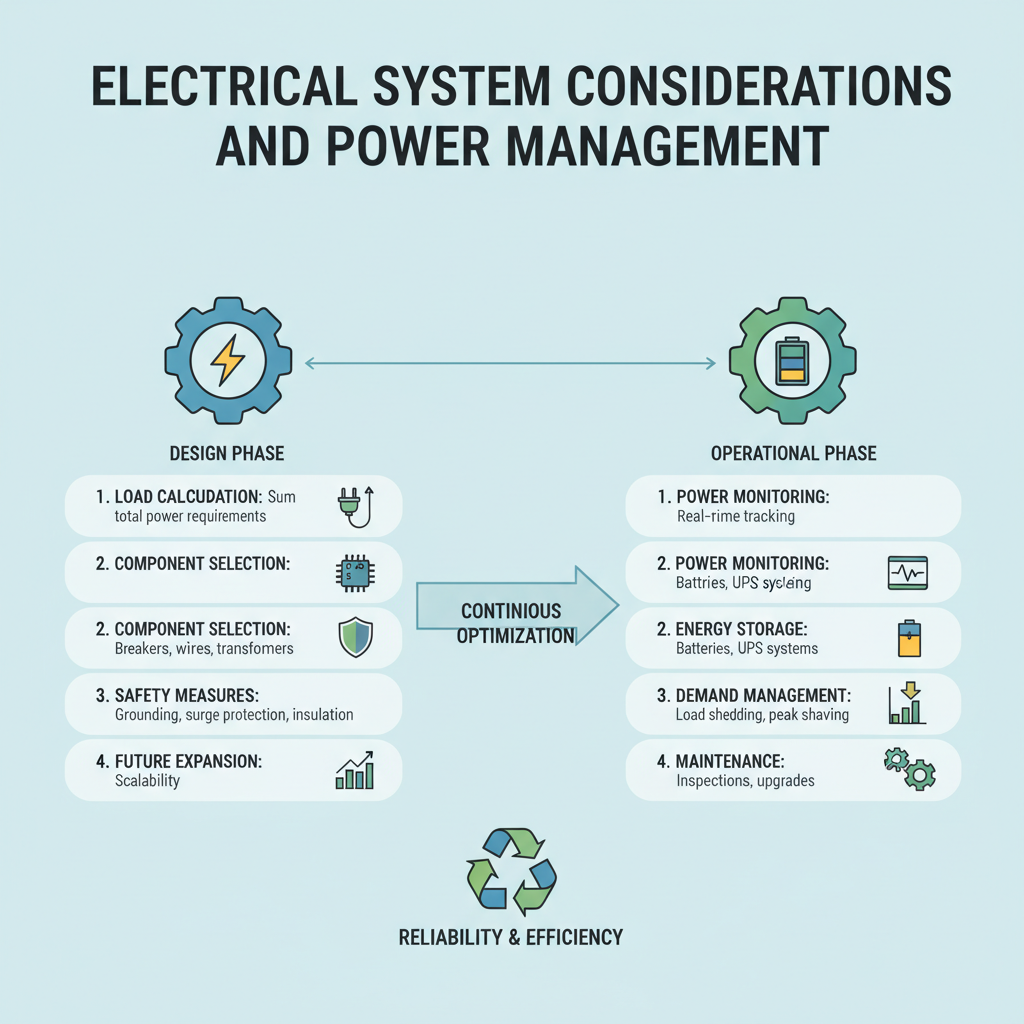
Calculating Total Power Draw
Adding a powered subwoofer increases your electrical system’s load. Calculate total power consumption using the formula:
$$P_{total} = P_{existing} + P_{subwoofer} times eta$$
Where $eta$ represents amplifier efficiency (typically 0.6-0.8 for Class AB, 0.85-0.95 for Class D).
Most powered subwoofers draw between 200-800 watts RMS. Your alternator must provide sufficient current for both existing and new components. Standard automotive alternators produce 80-120 amps, with roughly 40-60% available for audio equipment after essential systems.
Ground Loop Prevention
Multiple amplifiers can create ground loops, producing unwanted noise. Install your powered subwoofer’s ground wire to the same location as your existing amplifier’s ground. Use 12-gauge or larger wire for ground connections, keeping runs under 18 inches when possible.
Clean all ground connection points to bare metal using sandpaper or wire brushes. Apply dielectric grease to prevent corrosion and maintain long-term connectivity.
Installation Methods and Best Practices
Method 1: Parallel Signal Distribution
This approach splits your existing amplifier’s input signal to feed both the current system and new subwoofer. Use high-quality Y-splitter RCA cables or line output converters (LOCs) for signal distribution.
Installation Steps:
1. Locate your existing amplifier’s signal input source
2. Install Y-splitter cables at the signal source
3. Route new RCA cables to subwoofer location
4. Connect power and ground wiring for subwoofer
5. Adjust crossover and gain settings for integration
Method 2: Speaker-Level Signal Tapping
When RCA outputs aren’t available, tap into speaker-level signals using the subwoofer’s high-level inputs. This method requires careful attention to impedance matching and signal isolation.
Required Tools and Materials:
– Wire strippers and crimping tools
– High-quality speaker wire (14-16 gauge)
– Electrical tape and heat shrink tubing
– Multimeter for signal verification
– Fuse holders and appropriate fuses
Crossover Configuration and Frequency Management
Setting Optimal Crossover Points
Proper crossover configuration prevents frequency overlap between your existing speakers and new subwoofer. Most car audio systems benefit from subwoofer crossover points between 80-120 Hz.
Set your subwoofer’s low-pass filter to 80 Hz initially. Adjust upward if your existing speakers lack sufficient midbass response. Monitor for frequency gaps or overlaps during testing phases.
If your existing amplifier includes high-pass filtering for main speakers, coordinate these settings with your subwoofer’s crossover. The goal is seamless frequency transition without gaps or peaks.
Phase Alignment Optimization
Phase alignment ensures your subwoofer reinforces rather than cancels existing bass frequencies. Start with 0-degree phase setting and adjust while playing familiar music with strong bass content.
Switch between 0 and 180-degree phase settings while listening from your normal seating position. Choose the setting that produces fuller, more impactful bass response. Some subwoofers offer variable phase control for fine-tuning.
Compatibility Assessment Table
| System Type | Integration Difficulty | Recommended Method | Special Considerations |
|---|---|---|---|
| Factory Premium | Moderate | High-level input | May require DSP bypass |
| Aftermarket Head Unit | Easy | RCA connection | Check for unused outputs |
| Multi-amp Custom | Advanced | Signal distribution | Coordinate crossover points |
| Factory Basic | Easy | Speaker-level tap | Minimal interference risk |
Troubleshooting Common Integration Issues
Noise and Interference Problems
Ground loops manifest as alternator whine, engine noise, or constant humming. Verify all ground connections use the same reference point. Install noise filters on power lines if interference persists.
Radio frequency interference can affect signal quality in powered subwoofers. Route signal cables away from power wires and ignition components. Use shielded RCA cables for long signal runs.
Volume and Balance Issues
Mismatched gain settings between your existing amplifier and powered subwoofer create unbalanced sound. Set subwoofer gain to minimum and gradually increase while playing familiar music. The subwoofer should complement, not overpower, existing speakers.
Use a digital multimeter to match voltage levels between components. Most car audio systems operate with 2-4 volt pre-amp signals. Adjust subwoofer sensitivity to match your existing amplifier’s output characteristics.
Professional Installation vs. DIY Considerations
Complex factory systems with integrated DSP often require professional installation. These systems use proprietary communication protocols that can conflict with aftermarket additions. Professional installers have access to interface modules and bypass techniques.
DIY installation works well for straightforward aftermarket systems. Ensure you have proper tools, adequate workspace, and electrical safety knowledge. Mistakes in car audio installation can damage expensive components or create safety hazards.
Frequently Asked Questions
Will adding a powered subwoofer damage my existing amplifier?
No, when properly installed using appropriate signal sources. Powered subwoofers operate independently and don’t load your existing amplifier’s outputs.
Can I use my existing amplifier to power a passive subwoofer instead?
Only if your amplifier has sufficient power and appropriate frequency response you can use it to power a passive subwoofer. Most car amplifiers lack the power and low-frequency capability required for effective subwoofer operation.
How do I know if my electrical system can handle additional power draw?
Monitor your headlight brightness during bass-heavy music playback. Significant dimming indicates insufficient alternator capacity. Consider electrical system upgrades for high-power installations.
What’s the difference between adding a powered sub versus upgrading my existing amplifier?
Powered subwoofers offer dedicated bass reproduction with built-in amplification and processing. Upgrading existing amplifiers may improve overall system power but won’t necessarily improve bass response.
Can I add multiple powered subwoofers to my system?
Yes, but consider total power consumption and signal distribution requirements. Multiple subwoofers require careful placement and phase alignment for optimal performance.
Maximizing Your Enhanced Audio System
Adding a powered subwoofer to your existing amplified system dramatically improves bass response and overall musical enjoyment. The key to success lies in understanding your current system’s capabilities and choosing appropriate integration methods. Whether you select high-level inputs for simplicity or low-level connections for maximum quality, proper installation ensures years of enhanced audio performance without compromising your existing investment.