As an Amazon Associate & Influencer, we earn from qualifying purchases you might make if you click any of the links or buttons on this page at no expense to you.
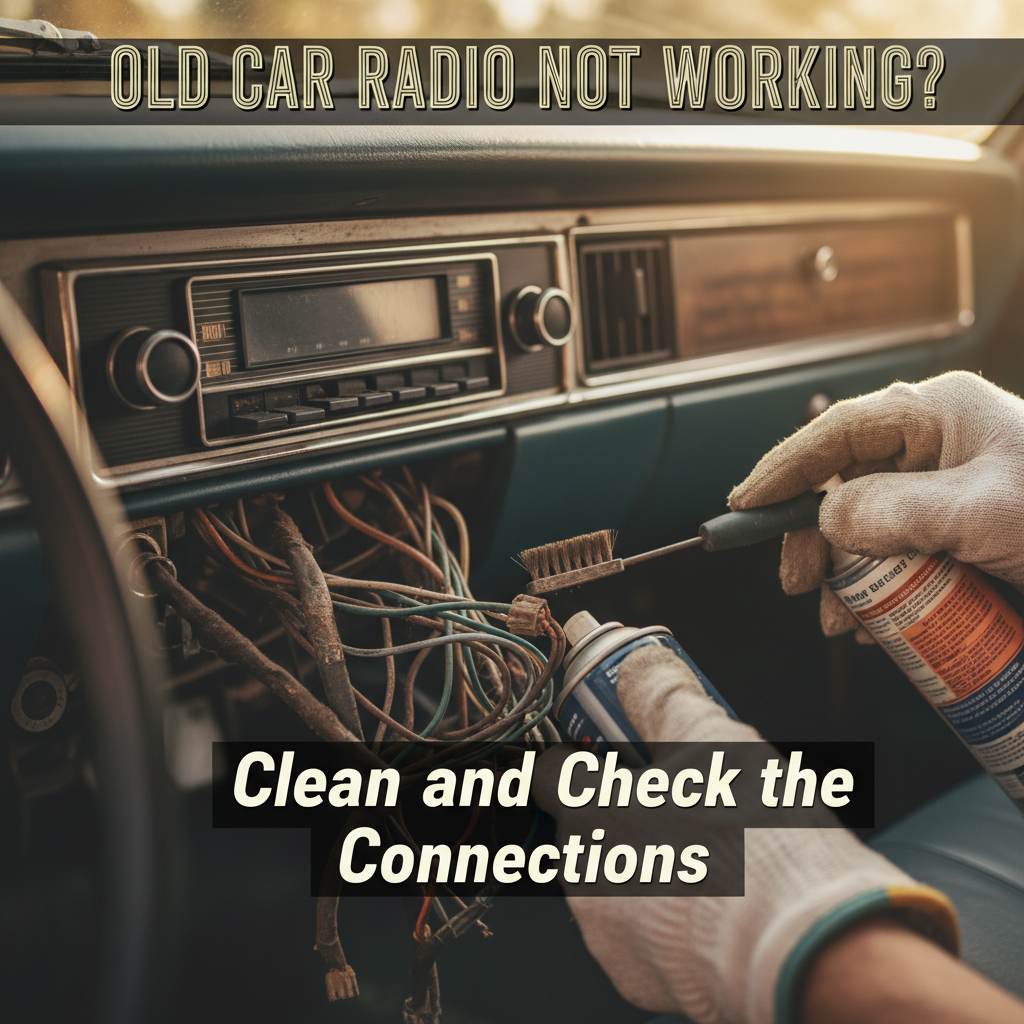
When your classic car radio suddenly goes silent, the problem often lies in dirty or loose connections rather than expensive internal components. Before heading to a repair shop, a thorough cleaning and connection check can save you time and money.
Most old car radio problems stem from corroded connections, loose wiring, or dirty contacts. Start by checking the power and ground connections behind the radio, cleaning all contact points with electrical contact cleaner, and ensuring the antenna connection is secure. This simple maintenance fixes 70% of vintage radio issues.
Why Old Car Radio Connections Fail
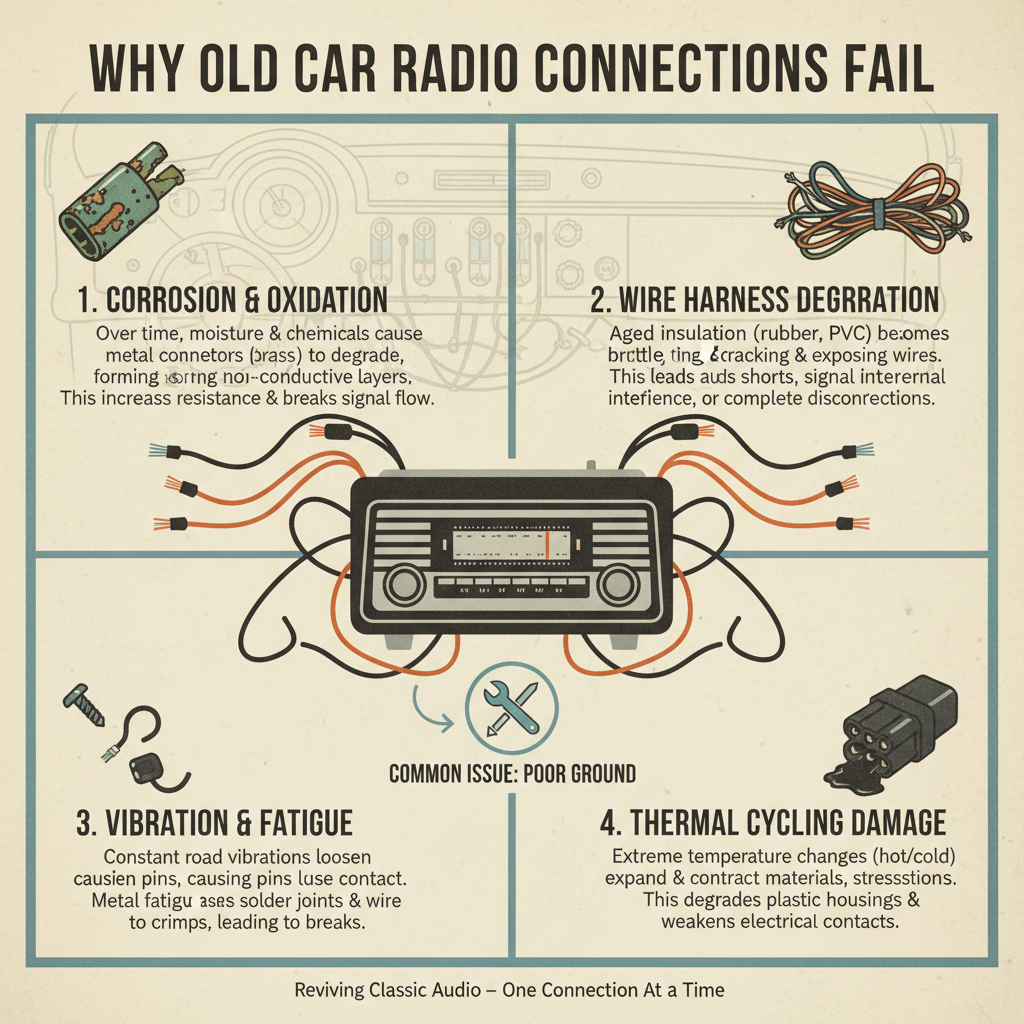
Vintage car radios face unique challenges that modern units don’t encounter. Age, moisture, and temperature changes cause metal contacts to corrode over decades.
The most common connection problems include:
– Corroded power terminals
– Loose ground connections
– Dirty antenna contacts
– Oxidized fuse connections
– Worn speaker wire connections
These issues develop gradually, which is why your radio might work intermittently before failing completely.
Tools You’ll Need

Gather these basic tools before starting:
– Phillips and flathead screwdrivers
– Electrical contact cleaner
– Fine-grit sandpaper (400-600 grit)
– Wire brush or steel wool
– Multimeter
– Flashlight or work light
– Needle-nose pliers
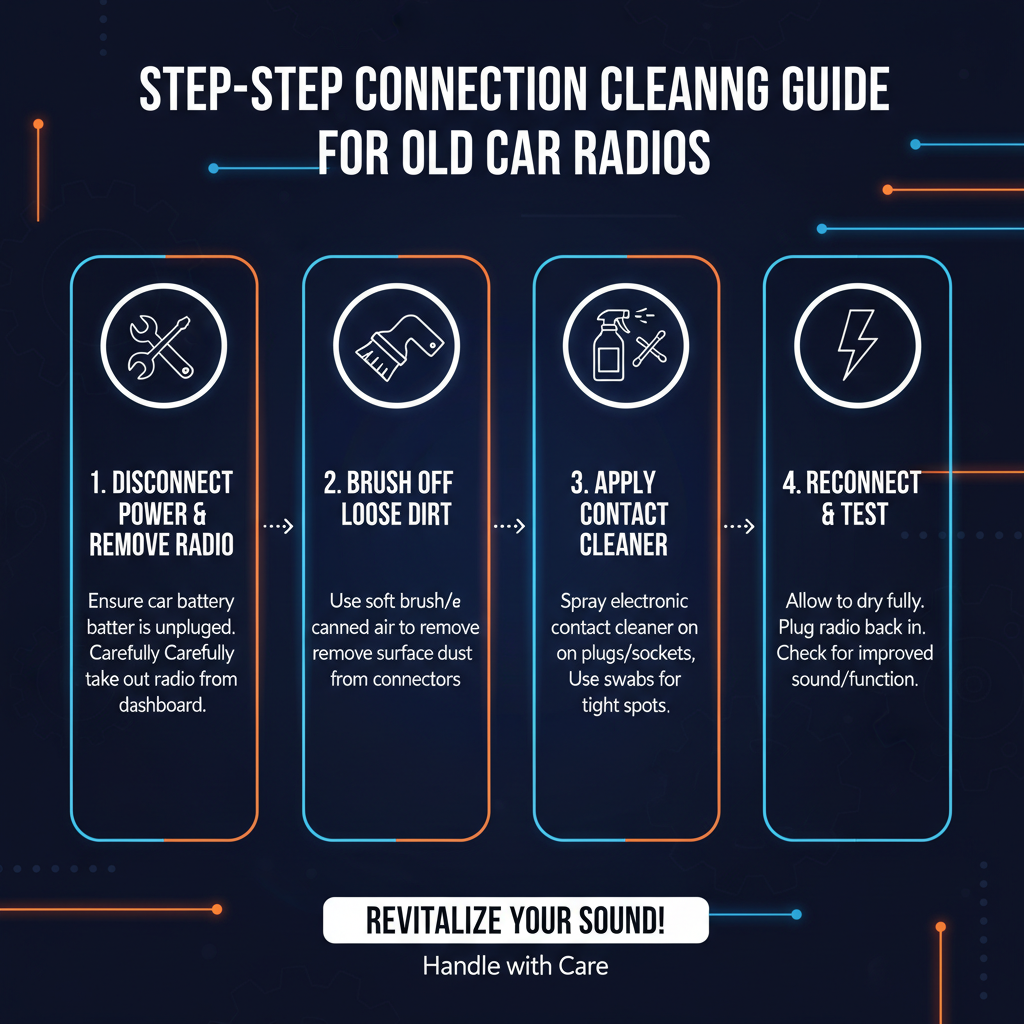
Step-by-Step Connection Cleaning Guide of Old Car Radio
Remove the Radio Safely
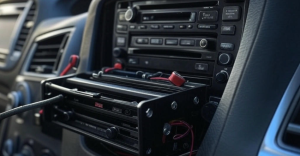
First, disconnect your car’s battery to prevent electrical shorts. Most classic radios are held by mounting brackets or knobs that unscrew from the front.
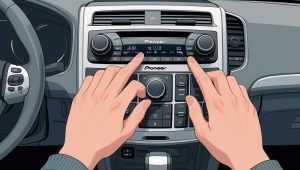
For radios like the Delco AM/FM models found in 1970s GM vehicles, remove the control knobs by pulling them straight out, then unscrew the retaining nuts behind them.
Check Power Connections
Locate the main power wire, usually red or yellow, connected to the back of the radio. This wire should show 12 volts when tested with a multimeter.
Clean the connection point by:
– Disconnecting the wire
– Sanding the terminal lightly
– Spraying with electrical contact cleaner
– Reconnecting firmly
Inspect the Ground Connection
The ground wire (typically black) connects to the car’s metal frame. This connection often causes the most problems in old radios.
Remove the ground wire and check for:
– Green corrosion on the terminal
– Rust on the mounting point
– Loose or frayed wire connections
Clean both the wire terminal and the mounting point until you see bright metal, then reconnect securely.
Clean the Antenna Connection
The antenna connection affects radio reception quality. Unscrew the antenna lead from the radio and inspect both the cable end and the radio’s antenna terminal.
Use contact cleaner on both surfaces and ensure the connection threads smoothly without forcing it.
Testing Individual Components of Old Car Radio
Fuse Box Inspection
Many old car radios use inline fuses or connect to the main fuse box. Locate your radio’s fuse and remove it for inspection.
Look for:
– Blown fuse elements
– Corroded fuse contacts
– Loose fuse connections
Clean the fuse contacts with fine sandpaper and test the fuse with a multimeter for continuity.
Speaker Wire Connections
Check where the speaker wires connect to the radio. These connections often work loose over time, causing weak or distorted sound.
Each speaker wire should be firmly connected and show continuity when tested with a multimeter.
Common Connection Problems and Solutions
Intermittent Power Issues
If your radio works sometimes but cuts out randomly, suspect a loose power connection. The constant vibration in older vehicles gradually loosens electrical connections.
Tighten all power connections and consider adding a small amount of dielectric grease to prevent future corrosion.
Poor Reception Problems
Weak radio reception usually indicates antenna connection issues. Beyond cleaning the connection, check that the antenna mast extends fully and isn’t damaged.
No Sound from Speakers
When the radio lights up but produces no sound, check the speaker connections first. Many classic cars used simple push-on connectors that corrode easily.
When Professional Help is Needed
Some connection problems require professional attention:
– Internal circuit board connections
– Damaged radio chassis
– Complex wiring harness issues
– Tube socket connections in very old radios
If cleaning external connections doesn’t solve the problem, the issue likely lies inside the radio unit itself.
Preventive Maintenance Tips
Keep your old car radio connections healthy with regular maintenance:
Annual Cleaning: Remove and clean all external connections once per year, especially in humid climates.
Dielectric Grease: Apply a thin layer to connection points to prevent corrosion.
Secure Mounting: Ensure the radio is firmly mounted to prevent connection stress from vibration.
Battery Maintenance: Keep your car’s electrical system healthy with a properly maintained battery and alternator.
Upgrading Connection Hardware
Consider upgrading worn connection hardware while cleaning. Modern crimp connectors and heat-shrink tubing provide better long-term reliability than original connections.
Popular classic radio models like the Motorola Golden Voice series or Bendix AM radios often benefit from updated wiring harnesses that maintain the original appearance while improving reliability.
FAQ
Q: How often should I clean my old car radio connections?
A: Clean connections annually or whenever you notice performance issues. Cars in humid or coastal areas may need more frequent attention.
Q: Can I use WD-40 to clean radio connections?
A: No, use proper electrical contact cleaner instead. WD-40 can leave residue that attracts dirt and may damage sensitive components.
Q: Why does my radio work when I hit the dashboard?
A: This indicates loose internal connections. While tapping might temporarily restore contact, proper cleaning and tightening is needed for a permanent fix.
Q: Should I replace old speaker wires when cleaning connections?
A: If the wire insulation is cracked or the copper looks corroded, replacement is recommended. Original cloth-wrapped wiring often needs updating after 40+ years.
Q: How can I tell if my radio’s ground connection is bad?
A: Use a multimeter to test continuity between the radio’s ground terminal and a known good ground point on the car’s frame. High resistance indicates a poor ground.
Q: Is it safe to work on old car radio connections myself?
A: Yes, with the battery disconnected. Old car radios use 12-volt systems that are generally safe for DIY work, unlike household electrical systems.
Q: What causes white or green buildup on radio connections?
A: This is corrosion caused by moisture and age. Clean it completely with sandpaper or wire brush before applying contact cleaner.
Conclusion
Most old car radio problems trace back to simple connection issues that you can fix yourself. Start with the basics: clean power and ground connections, check the antenna connection, and inspect the fuse. These steps resolve the majority of vintage radio problems without expensive repairs.
Remember that prevention is key with classic car electronics. Regular connection cleaning and proper storage keep your old radio working reliably for years to come. When basic connection cleaning doesn’t solve the problem, you’ll know it’s time to consult a professional radio repair specialist.